
Shoulder treatment
Shoulder Sensory Nerve Block, Ablation, and Peripheral Nerve Stimulation
Shoulder Sensory Nerve Block, Ablation, and Peripheral Nerve Stimulation
Evidence: Emerging. Newer shoulder denervation techniques may help selected patients with chronic pain, but the evidence is smaller and less mature than for established rehabilitation and joint-directed care.
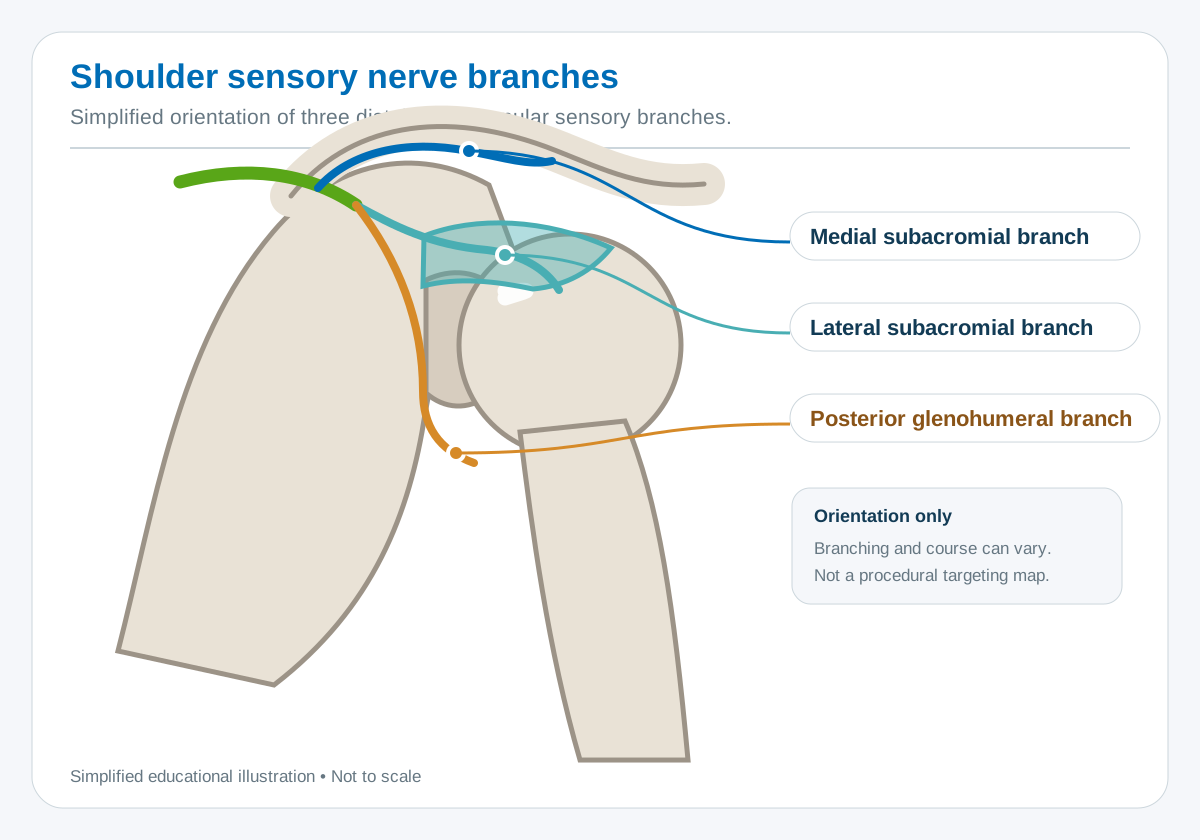
Which nerves are targeted
Elite Pain & Health evaluates selected shoulder sensory nerve branches that carry pain information from different regions around the shoulder. The exact technical targets are documented in the medical record and consent when appropriate. Anatomy can vary, so precise target selection and image guidance are important.
Three different procedures
Diagnostic nerve block: Temporary numbing medicine is placed near selected shoulder sensory nerve branches using ultrasound or fluoroscopy, selected according to the case. During the expected anesthetic window, the team records the amount of relief and change during a previously painful activity.
Conventional radiofrequency ablation: Ultrasound and fluoroscopy are used together to place conventional radiofrequency energy at selected sensory targets. The intent is pain reduction, not repair of the joint, labrum, or rotator cuff.
Peripheral nerve stimulation: A small lead is placed with ultrasound and fluoroscopy together and provides electrical stimulation near selected nerves. The type and duration are selected according to the condition, treatment plan, and available system. Device-specific preparation, restrictions, follow-up, and removal instructions are provided separately.
Blocks before ablation or PNS
Before conventional radiofrequency ablation, insurance requirements may call for one or two diagnostic blocks. The payer-required response is typically at least 50% and sometimes 80% improvement. One percentage should not be treated as a universal medical definition.
A diagnostic block is not required in every PNS case. PNS candidacy and coverage requirements are reviewed individually.
What the evidence shows
Anatomic research has helped define shoulder sensory targets and technical approaches. Clinical evidence is still developing. Earlier randomized trials of pulsed radiofrequency did not consistently outperform conventional care, while newer cohort studies of cooled radiofrequency report improvement in selected patients. Cohort results are useful but do not prove how the procedure compares with other care.
Shoulder PNS research is also preliminary for most musculoskeletal conditions. Patients should understand the uncertainty before choosing a procedure.
Who may be considered
These procedures may be discussed for chronic shoulder pain that remains functionally limiting after diagnosis-specific conservative care, particularly when surgery is not desired, not appropriate, or has not solved the problem. A well-documented response to a targeted diagnostic block may guide ablation selection, but it cannot guarantee the outcome.
Risks and follow-up
Risks include temporary pain, bleeding, infection, numbness or weakness, nerve injury, incomplete relief, and injury to nearby structures. Ablation can cause neuritis or unwanted sensory change. PNS adds device-specific risks such as lead movement, skin problems, uncomfortable stimulation, and need for removal.
Sources
- Technical Note: Shoulder Sensory Branch Radiofrequency Targets
- Systematic Review: Radiofrequency for Chronic Shoulder Pain
- Prospective Cohort: Cooled Radiofrequency Ablation
- Review: Peripheral Nerve Stimulation for Shoulder Pain
Technical nerve targets remain in the medical record and consent. Conventional RFA and PNS require individual risk assessment; device instructions are provided separately.
Clinically reviewed by Keley John Booth, MD
Get urgent care for these
- The shoulder looks deformed or a bone may be broken after an injury
- The arm is cold, pale, blue or severely swollen
- New major weakness or loss of feeling
- Fever with a hot, red, swollen shoulder
- Shoulder pain with chest pressure, shortness of breath, sweating, or pain spreading to the jaw or arm
These need assessment now, not an appointment next week. Go to an emergency department or call 911.