
Shoulder condition or diagnosis
Glenohumeral Shoulder Osteoarthritis
Glenohumeral Shoulder Osteoarthritis
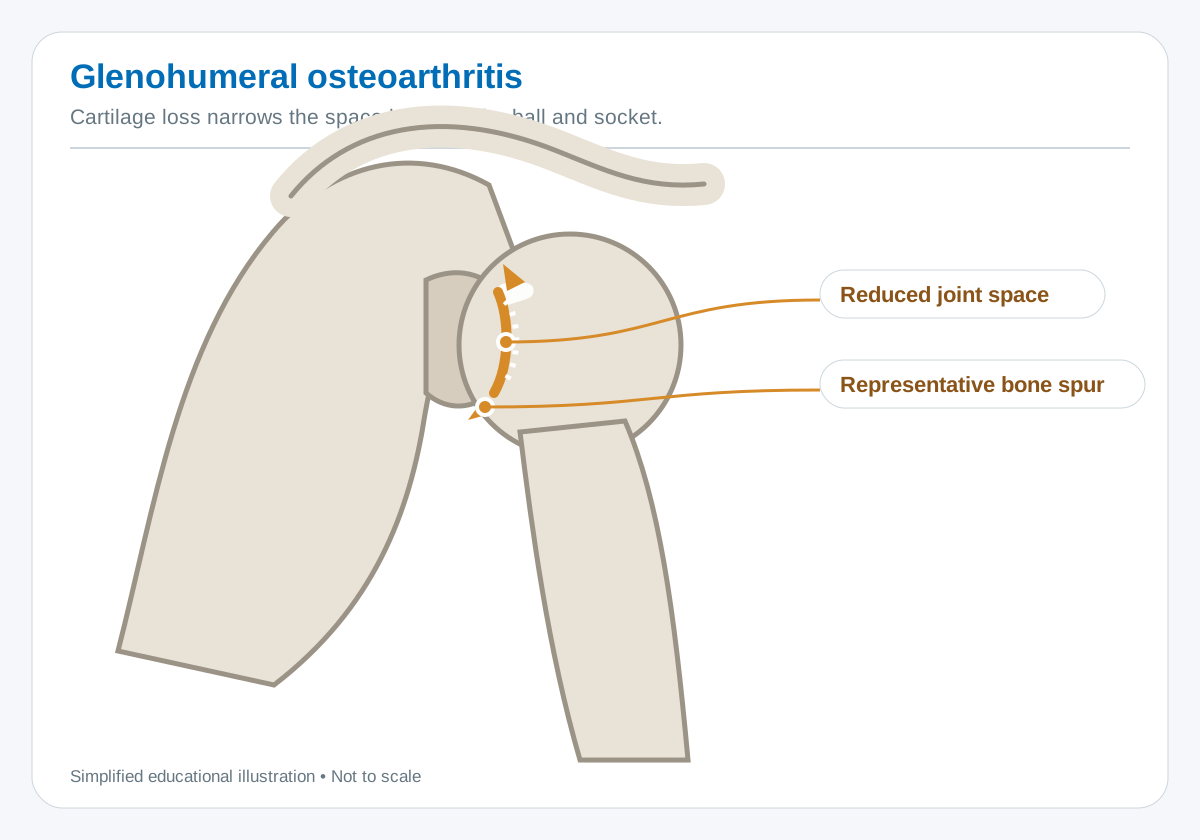
In plain language: Glenohumeral osteoarthritis is wear and loss of the smooth cartilage in the shoulder’s ball-and-socket joint. The result may be deep pain, stiffness, and reduced function.
Symptoms
Pain often feels deep in the joint and may be felt toward the back of the shoulder. It can worsen with activity, weather changes, or sleep. Motion may become progressively limited. Grinding, clicking, or catching can occur as the joint surfaces change.
The amount of arthritis on an X-ray does not always match the amount of pain. The examination helps determine whether the glenohumeral joint is the main pain generator or whether the rotator cuff, AC joint, or neck also contributes.
Diagnosis
X-rays are usually the first imaging study. They can show joint-space loss, bone spurs, and changes in the shape of the joint. MRI or CT may be used for selected questions, including rotator cuff integrity or surgical planning, but they are not necessary for every patient.
A diagnostic glenohumeral joint injection may help when the source remains uncertain. Temporary relief after accurately targeted numbing medicine supports, but does not by itself prove, that the joint is a major contributor.
Treatment options
Treatment is based on function, not the X-ray alone. Physical therapy can preserve useful motion and strengthen the muscles that support the joint. Acetaminophen, oral or topical NSAIDs, or topical lidocaine may be considered depending on medical history and clinician guidance.
A glenohumeral corticosteroid injection may provide temporary relief. PRP for shoulder arthritis is conditional: small studies exist, but the evidence base is much smaller than for knee arthritis. BMAC is emerging, with limited shoulder-specific research and no FDA approval for treating orthopedic conditions such as shoulder pain.
Suprascapular or other shoulder sensory nerve procedures may be considered for selected chronic pain when joint-directed care is insufficient or surgery is not appropriate. Evidence varies by technique. Severe pain and functional loss despite nonsurgical care may justify a shoulder-replacement consultation.
When to seek prompt care
Rapid swelling, fever, redness, or severe pain without the usual pattern requires assessment for causes other than routine osteoarthritis. New weakness, numbness, deformity, or circulation change also needs prompt care.
Sources
- AAOS Clinical Practice Guideline: Glenohumeral Osteoarthritis
- AAOS Plain Language Summary: Glenohumeral Osteoarthritis
- American College of Radiology: Chronic Shoulder Pain
This page provides general education. Imaging severity alone does not determine treatment.
Clinically reviewed by Keley John Booth, MD
Get urgent care for these
- The shoulder looks deformed or a bone may be broken after an injury
- The arm is cold, pale, blue or severely swollen
- New major weakness or loss of feeling
- Fever with a hot, red, swollen shoulder
- Shoulder pain with chest pressure, shortness of breath, sweating, or pain spreading to the jaw or arm
These need assessment now, not an appointment next week. Go to an emergency department or call 911.