
Shoulder treatment
Bone Marrow Aspirate Concentrate (BMAC) Shoulder Injections
Evidence: Emerging. Shoulder-specific evidence for nonsurgical BMAC injection is limited. BMAC should not be described as proven cartilage or tendon regeneration, and regenerative medicine therapies are not FDA-approved to treat orthopedic conditions such as shoulder pain.
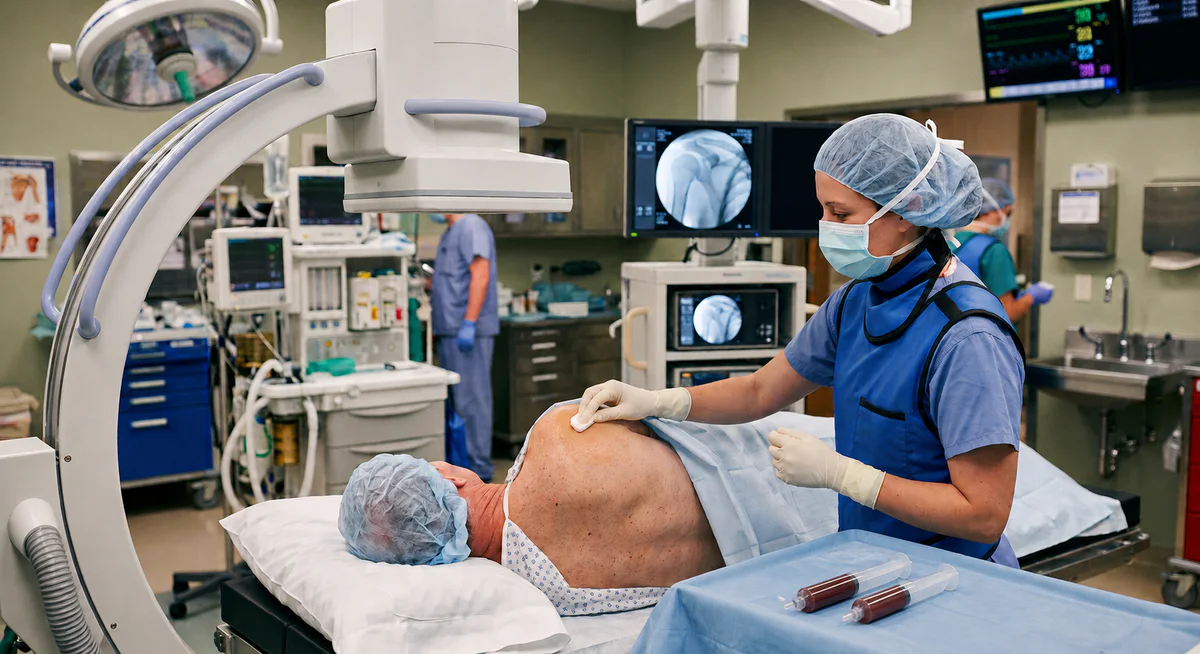
What BMAC is
Bone marrow is collected from the posterior iliac crest, the back portion of the pelvic bone, and minimally processed to prepare autologous bone marrow aspirate concentrate, or BMAC. “Minimally processed” describes the practice’s preparation and is not a claim about a particular FDA regulatory classification. The concentrate contains platelets and a mixture of cells and signaling components. Composition varies by patient and processing method.
The phrase “stem cell therapy” can create a misleading impression of a standardized product that reliably grows new tissue. For patient education, the more accurate term is bone marrow aspirate concentrate.
Targets offered at Elite Pain & Health
BMAC may be considered for selected problems involving the:
- Glenohumeral joint
- AC joint
- Subacromial or subacromial–subdeltoid bursa
- Shoulder labrum
- Supraspinatus, infraspinatus, or subscapularis tendon
- Selected rotator cuff tears
Evidence cannot be assumed to transfer from one target to another.
All BMAC procedures use image guidance. Glenohumeral and AC joint injections use ultrasound or fluoroscopy, selected according to the case. The subacromial–subdeltoid bursa and rotator cuff tendon or tear targets use ultrasound. A shoulder labrum injection uses ultrasound or fluoroscopy, selected according to the case.
What the research shows
Shoulder injection studies are small. One randomized pilot trial compared unprocessed bone marrow aspirate—not BMAC—with corticosteroid for glenohumeral osteoarthritis. It ended early and had mixed results, so it cannot establish BMAC as standard care.
A randomized trial has evaluated BMAC as an addition during surgical rotator cuff repair. That is not the same as an outpatient nonsurgical tendon injection and should not be used to claim that nonsurgical BMAC repairs tears.
FDA status and honest expectations
The FDA has not approved regenerative medicine therapies to treat orthopedic conditions such as shoulder pain. Shoulder-specific evidence for nonsurgical BMAC injection remains limited, and evidence for one shoulder target cannot be assumed to apply to another.
BMAC may be considered for selected patients with the goal of improving pain or function. Treatment does not guarantee cartilage regrowth, tendon or labral healing, or avoidance of surgery.
Written informed consent is reviewed with each patient before every procedure. The discussion addresses the proposed target, target-specific evidence, risks, alternatives, costs, regulatory status, and important uncertainties.
Risks and tradeoffs
Risks include pain and bruising at the marrow collection site, bleeding, infection, injury to nearby structures, post-injection flare, and no benefit. There may be cost and recovery burdens. Medication and activity instructions depend on the approved protocol and should come directly from the care team.
Questions to ask
- What exact diagnosis and target are being treated?
- Is the evidence for this target based on injection studies or surgery studies?
- What result is realistic, and when will it be assessed?
- What are the total costs and alternatives?
- What would trigger referral or a change in plan?
Sources
- FDA: Important Information About Regenerative Medicine Therapies
- Pilot Randomized Trial: Bone Marrow Aspirate Versus Cortisone for Glenohumeral Osteoarthritis
- Randomized Trial: BMAC Augmentation During Surgical Rotator Cuff Repair
Regenerative medicine therapies are not FDA-approved to treat orthopedic conditions such as shoulder pain. Patients should understand the proposed target, expected goal, alternatives, risks, cost, and important uncertainties before treatment.
Clinically reviewed by Keley John Booth, MD
Get urgent care for these
- The shoulder looks deformed or a bone may be broken after an injury
- The arm is cold, pale, blue or severely swollen
- New major weakness or loss of feeling
- Fever with a hot, red, swollen shoulder
- Shoulder pain with chest pressure, shortness of breath, sweating, or pain spreading to the jaw or arm
These need assessment now, not an appointment next week. Go to an emergency department or call 911.