
Shoulder condition or diagnosis
Shoulder Instability and Recurrent Dislocation
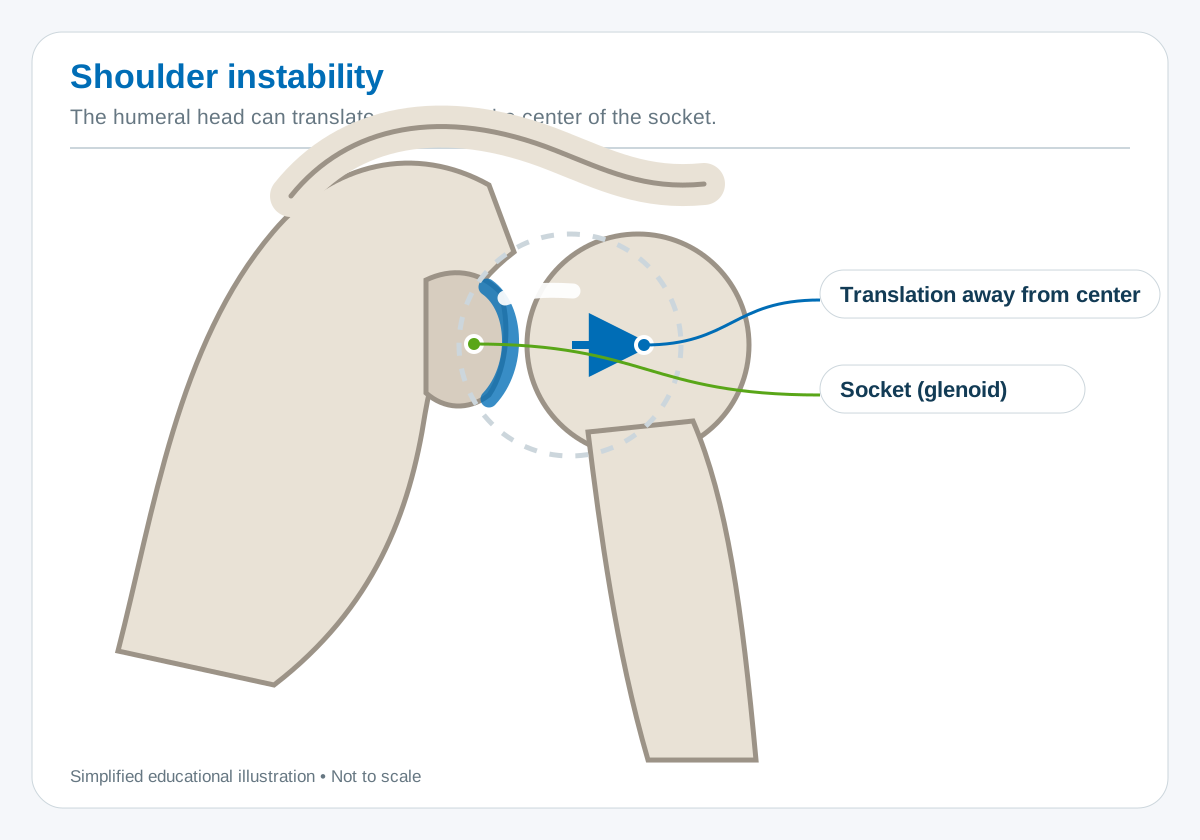
In plain language: Shoulder instability occurs when the ball moves excessively on the socket. Repeated subluxations or dislocations can damage the labrum, ligaments, and bone.
Why instability develops
Traumatic instability often begins when the arm is forced out of position. The first event can stretch or tear the capsule and labrum or create bone injury. Repeated overhead stress and generalized joint looseness can also contribute, sometimes in more than one direction.
After one dislocation, the risk of recurrence depends on age, activity, tissue injury, and bone loss. A patient’s goals matter: the best plan for a collision athlete may differ from the plan for a lower-demand adult.
Symptoms and diagnosis
Symptoms include slipping, dead-arm sensations, pain in vulnerable positions, or fear that the shoulder will come out. The examination checks motion, strength, laxity, and control while avoiding unnecessary provocation.
X-rays assess alignment and bone injury. MRI or MR arthrography can evaluate the labrum and soft tissues. CT may be used when the amount and location of bone loss will change treatment planning.
Treatment options
A rehabilitation program strengthens the rotator cuff and shoulder-blade muscles and retrains control through progressively challenging positions. Activity modification or temporary bracing may be useful in selected cases.
Injections may reduce pain from an associated structure, but they do not mechanically stabilize a loose shoulder. PRP or BMAC should not be described as established treatment for recurrent dislocation.
Orthopedic referral may be appropriate after a first traumatic dislocation in a high-risk young athlete, with recurrent events, significant labral or bone injury, or continued instability after rehabilitation. The consultation helps compare continued nonsurgical care with stabilization procedures.
Urgent care
A shoulder that remains out of place needs emergency reduction by a trained clinician. Do not force it back yourself. A cold, pale, blue, numb, or weak arm needs immediate evaluation.
Sources
- American College of Radiology: Acute Shoulder Pain
- American College of Radiology: Chronic Shoulder Pain
- AAOS OrthoInfo: SLAP Tears
This page provides general education. A current dislocation is an emergency.
Clinically reviewed by Keley John Booth, MD
Get urgent care for these
- The shoulder looks deformed or a bone may be broken after an injury
- The arm is cold, pale, blue or severely swollen
- New major weakness or loss of feeling
- Fever with a hot, red, swollen shoulder
- Shoulder pain with chest pressure, shortness of breath, sweating, or pain spreading to the jaw or arm
These need assessment now, not an appointment next week. Go to an emergency department or call 911.