
Shoulder treatment
Physical Therapy and Home Rehabilitation for Shoulder Pain
Evidence: Established option. Exercise-based rehabilitation is a core, low-risk treatment for many shoulder conditions. The specific program should match the diagnosis, irritability, and functional goal.
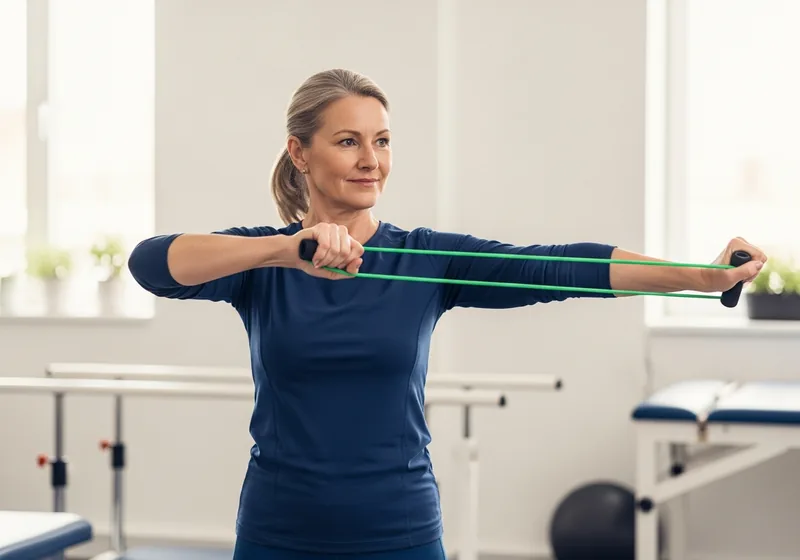
What physical therapy is designed to do
Physical therapy is not simply a list of generic exercises. A good program identifies what is limiting function and builds capacity gradually. That may include restoring comfortable motion, strengthening the rotator cuff, improving shoulder-blade control, and retraining lifting or overhead activity.
The first goal is often to make movement tolerable enough to practice. Later goals may include sleep, dressing, work demands, carrying, throwing, swimming, or returning to the gym.
What a shoulder program may include
- Education about the condition and activities that currently overload it
- Range-of-motion work matched to the stage of healing
- Rotator cuff and shoulder-blade strengthening
- Neck, upper-back, and posture work when relevant
- Gradual exposure to reaching, lifting, or sport-specific positions
- A home program that can be repeated consistently
The plan should change based on response. Mild short-lived soreness can be part of rebuilding capacity. A large or lasting symptom spike, new weakness, or loss of motion is a reason to adjust the dose and reconsider the diagnosis.
How therapy differs by condition
Rotator cuff tendinopathy often benefits from progressive loading rather than complete rest. Frozen shoulder may require gentler motion during a highly painful stage and more stretching later. Instability rehabilitation focuses on control and strength rather than forcing extra range. Arthritis programs balance useful motion with strength and activity modification.
This is why the same handout is not right for every painful shoulder.
How other treatments fit with therapy
Medication or a targeted corticosteroid injection may sometimes reduce pain enough to participate more fully. A procedure should have a clear purpose: opening a rehabilitation window, clarifying a pain source, or addressing a specific target. It should not replace the active work needed to restore function.
PRP, BMAC, nerve procedures, or surgery may be considered for selected patients, but each still requires a plan for movement, recovery, and return to activity.
When therapy alone may not be enough
Prompt imaging or referral may be appropriate after major trauma, with sudden marked weakness, a current or recurrent dislocation, meaningful bone loss, infection concern, or a progressive neurologic deficit. A lack of improvement should trigger reassessment rather than endless repetition of the same exercises.
Questions to ask
- What function are we trying to restore first?
- Which movements should I continue, modify, or temporarily avoid?
- How much soreness is acceptable after exercise?
- What finding would cause us to change the plan or order imaging?
- How will we measure progress besides a pain score?
Sources
- AAOS 2025 Clinical Practice Guideline: Rotator Cuff Injuries
- AAOS OrthoInfo: Frozen Shoulder
- APTA Clinical Practice Guideline: Adhesive Capsulitis
Exercise selection and progression should be individualized. Stop and seek assessment for new major weakness, deformity, loss of feeling, or severe unexpected symptoms.
Clinically reviewed by Keley John Booth, MD
Get urgent care for these
- The shoulder looks deformed or a bone may be broken after an injury
- The arm is cold, pale, blue or severely swollen
- New major weakness or loss of feeling
- Fever with a hot, red, swollen shoulder
- Shoulder pain with chest pressure, shortness of breath, sweating, or pain spreading to the jaw or arm
These need assessment now, not an appointment next week. Go to an emergency department or call 911.