
Shoulder condition or diagnosis
Subacromial Pain Syndrome, Shoulder Impingement, and Bursitis
Subacromial Pain Syndrome, Shoulder Impingement, and Bursitis
In plain language: “Shoulder impingement” is a familiar term, but pain in this area usually reflects a combination of tendon, bursa, movement, and load factors—not simply a bone pinching tissue every time you lift your arm.
What the terms mean
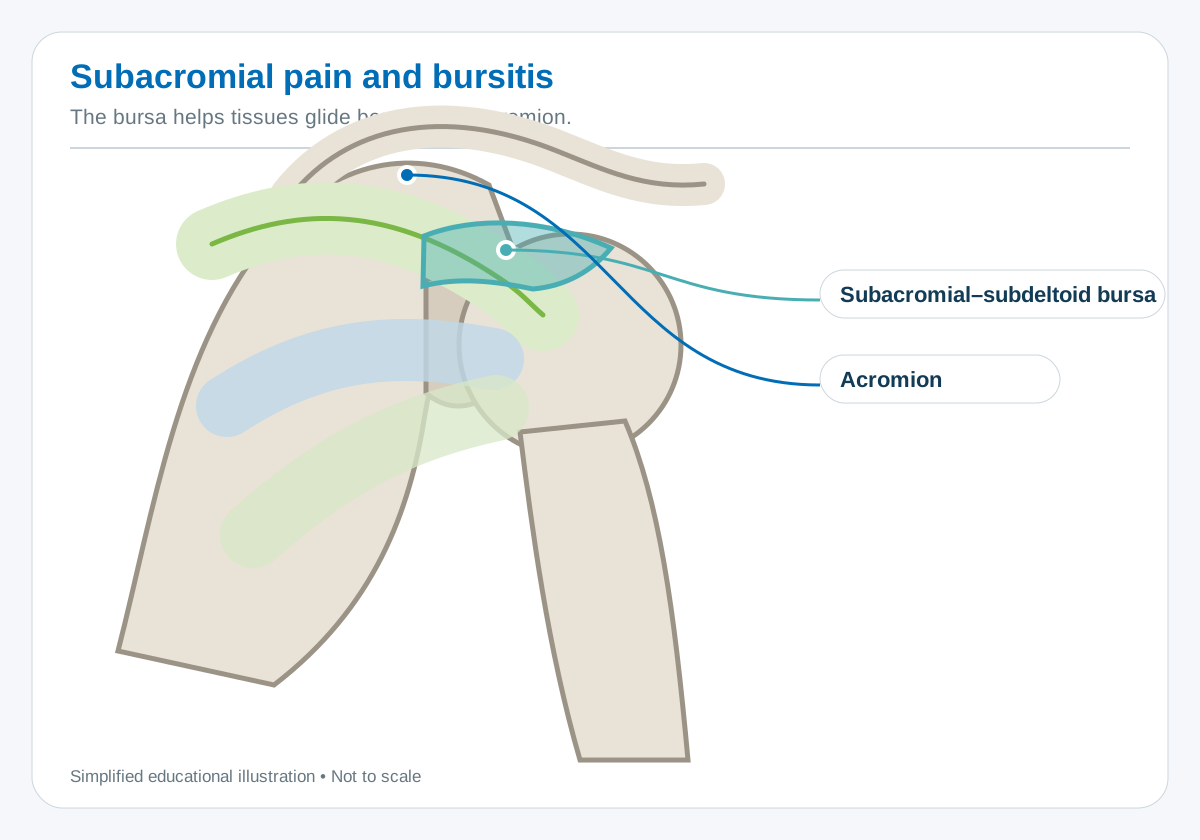
The subacromial–subdeltoid bursa is a thin, fluid-containing cushion between the rotator cuff and tissues above it. It can become irritated along with the rotator cuff. Subacromial pain syndrome is a broad, useful description for pain arising from this region. The older term shoulder impingement is still commonly used and searched.
Symptoms
Pain often occurs along the outer shoulder or upper arm. Reaching overhead, lifting away from the body, lowering the arm, or lying on that side may hurt. Symptoms can build after a change in work, exercise, or repeated overhead use.
Diagnosis
No single movement test proves subacromial pain. The clinician looks for a consistent pattern across the history, motion, strength, and response to load. The neck, AC joint, and glenohumeral joint are considered because they can mimic this pattern.
X-rays may help identify arthritis or other bone findings. Ultrasound or MRI can evaluate the bursa and rotator cuff when the result is likely to change care. A targeted diagnostic injection into the subacromial bursa may sometimes help determine how much this region contributes to symptoms.
Treatment options
Care usually begins with changing painful loads without stopping all movement. Physical therapy can improve cuff strength, shoulder-blade control, and tolerance for reaching. Medication may help temporarily when it is safe for the individual.
An image-guided corticosteroid injection into the subacromial bursa can be considered when pain prevents sleep or rehabilitation. Its main role is short-term symptom relief, not repair of a tendon. PRP into the bursa or adjacent tendon is a conditional option with variable evidence; it should not be presented as routine or guaranteed tissue regeneration.
When to seek prompt care
Seek prompt evaluation for sudden major weakness after an injury, inability to use the arm, deformity, fever with a hot swollen joint, or a cold, numb, or discolored arm.
Sources
- AAOS 2025 Clinical Practice Guideline: Rotator Cuff Injuries
- AAOS Plain Language Summary: Rotator Cuff Injuries
- American College of Radiology: Chronic Shoulder Pain
This page is educational and does not diagnose an individual patient.
Clinically reviewed by Keley John Booth, MD
Get urgent care for these
- The shoulder looks deformed or a bone may be broken after an injury
- The arm is cold, pale, blue or severely swollen
- New major weakness or loss of feeling
- Fever with a hot, red, swollen shoulder
- Shoulder pain with chest pressure, shortness of breath, sweating, or pain spreading to the jaw or arm
These need assessment now, not an appointment next week. Go to an emergency department or call 911.