
Shoulder treatment
PRP for the Shoulder Labrum and Rotator Cuff
PRP for the Shoulder Labrum and Rotator Cuff
Evidence: Conditional to emerging; not routine. PRP research for rotator cuff disease is mixed, and direct evidence for nonsurgical labral injection is limited. Patient selection and honest expectations are essential.
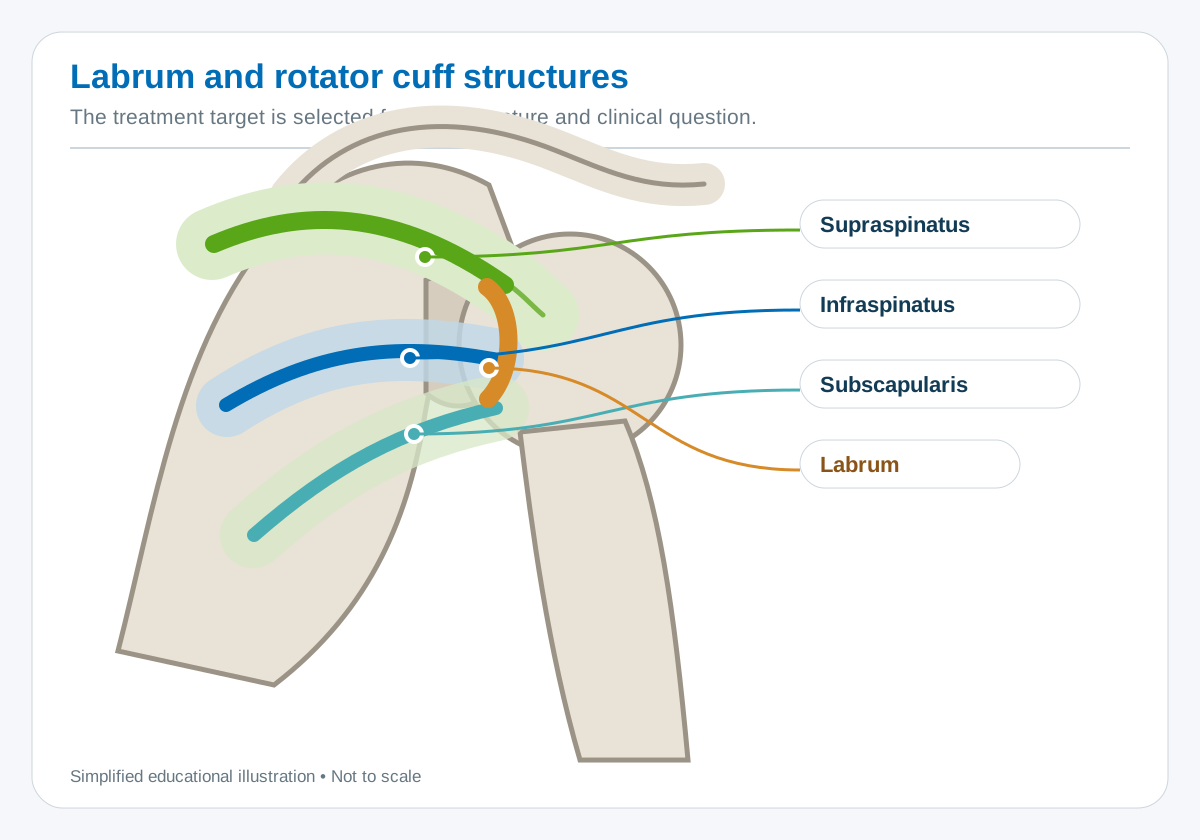
Targets offered at Elite Pain & Health
PRP may be considered for selected problems involving the:
- Supraspinatus tendon
- Infraspinatus tendon
- Subscapularis tendon
- Partial or selected rotator cuff tears
- Shoulder labrum
These are not interchangeable targets. Examination and imaging should support both the diagnosis and the planned location. Rotator cuff tendon and tear injections use ultrasound. A shoulder labrum injection uses ultrasound or fluoroscopy, selected according to the case.
How PRP is intended to work
Autologous platelet-rich plasma is prepared from the patient’s own blood and contains concentrated platelets that release biologic signals. The intended goal is to support a healing response and improve pain and function. It is not a mechanical repair. An injection cannot pull a retracted tendon back to bone or stabilize a shoulder with meaningful bone loss.
Rotator cuff evidence
Studies differ in PRP formulation, tear type, injection location, comparison treatment, and follow-up. Some meta-analyses report modest improvement at certain time points, while others show no clinically important advantage. The AAOS 2025 guideline states that routine PRP use for rotator cuff tendinopathy or partial tears is not supported.
“Not routine” does not mean PRP can never be considered. It means the clinician and patient should discuss why this specific case may differ, what simpler options have been tried, and how success will be measured.
Labral evidence
The labrum is deep within the joint and labral findings often overlap with biceps or instability problems. Evidence that a nonsurgical PRP injection heals a shoulder labral tear is limited. PRP should not be described as a proven alternative to stabilization when the main problem is recurrent dislocation.
Rehabilitation and follow-up
An active rehabilitation plan remains important. Loading is progressed based on the structure, symptoms, and procedure plan. The practice should provide specific medication and activity instructions; patients should not borrow a protocol from another clinic or online source.
PRP is usually performed as one treatment. Any repeat is considered only after the response, diagnosis, goals, and alternatives have been reviewed. An automatic series is not scheduled.
NSAIDs can affect the intended biologic response. Exact stop and restart timing is provided in the procedure handout. Do not stop prescribed aspirin, antiplatelet medication, or an anticoagulant unless the prescribing and procedural clinicians give coordinated instructions.
Risks and tradeoffs
Risks include blood-draw symptoms, post-injection pain flare, bleeding, infection, tissue injury, and no meaningful improvement. PRP may be self-pay, and repeat procedures should not be scheduled automatically without reviewing the response.
Sources
- AAOS 2025 Clinical Practice Guideline: Rotator Cuff Injuries
- Systematic Review: PRP for Partial-Thickness Rotator Cuff Tears
- Meta-analysis: PRP Versus Corticosteroid for Rotator Cuff Disease
- AAOS OrthoInfo: SLAP Tears
The target, medication instructions, and rehabilitation plan are individualized and provided by the treating team. No tissue-healing result is guaranteed.
Clinically reviewed by Keley John Booth, MD
Get urgent care for these
- The shoulder looks deformed or a bone may be broken after an injury
- The arm is cold, pale, blue or severely swollen
- New major weakness or loss of feeling
- Fever with a hot, red, swollen shoulder
- Shoulder pain with chest pressure, shortness of breath, sweating, or pain spreading to the jaw or arm
These need assessment now, not an appointment next week. Go to an emergency department or call 911.