
Shoulder treatment
Medications for Shoulder Pain
Medications for Shoulder Pain
Evidence: Established for short-term symptom management. Medication may reduce pain enough to sleep, move, or participate in rehabilitation. It does not identify the pain source or repair a torn tendon.
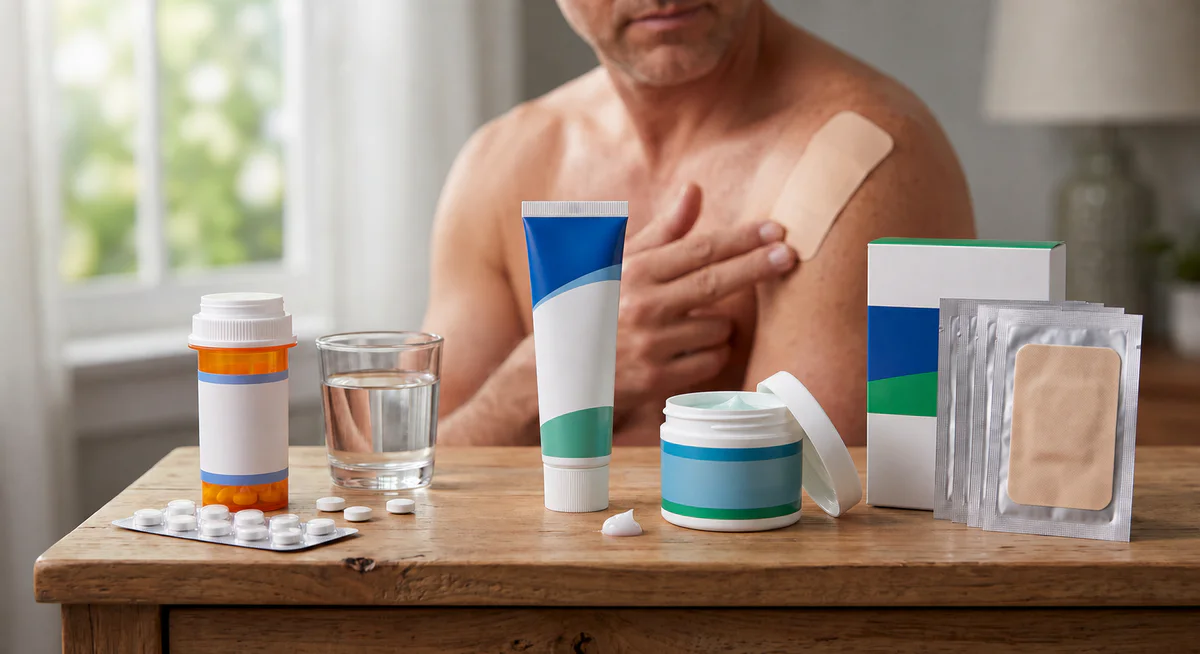
The safest choice depends on your age, medical conditions, allergies, other medicines, and the product label. “Over the counter” does not mean risk-free.
Acetaminophen (Tylenol)
Acetaminophen can reduce pain but is not an anti-inflammatory drug. It may be an option when an NSAID is not appropriate. The same ingredient appears in many cold, flu, sleep, and prescription combination products, so accidental double-dosing is possible.
Too much acetaminophen can cause severe liver injury. Ask a clinician or pharmacist before use if you have liver disease, drink alcohol regularly, take warfarin, or use other products containing acetaminophen. Follow the package or prescription directions rather than a one-size-fits-all dose from a web page.
Oral NSAIDs
Nonsteroidal anti-inflammatory drugs, or NSAIDs, include OTC ibuprofen and naproxen as well as prescription options such as diclofenac, meloxicam, celecoxib, and others. They can reduce pain and inflammation for some shoulder conditions.
NSAIDs can cause stomach bleeding, kidney injury, fluid retention, higher blood pressure, and cardiovascular problems. Risk may be greater with older age, ulcers, kidney or heart disease, blood thinners, or longer use. They are generally used at the lowest effective dose for the shortest appropriate time.
Do not combine oral diclofenac with ibuprofen, naproxen, or another NSAID unless the prescribing clinician specifically directs it. Taking two NSAIDs usually increases risk without providing a reliable extra benefit.
Topical diclofenac gel, including Voltaren Arthritis Pain
Topical diclofenac delivers an NSAID through the skin. The OTC Voltaren Arthritis Pain label names certain joints, such as the hands, wrists, elbows, feet, ankles, and knees; it does not include the shoulder. A clinician may still recommend Voltaren gel for shoulder pain off label after considering the target, skin, other NSAID exposure, and medical history.
Off-label use means a clinician is recommending an FDA-approved medication in a way not listed on that product’s label. It does not mean the product is unapproved or automatically inappropriate. It does mean the decision should be transparent and individualized.
Do not apply topical diclofenac to broken or infected skin, and do not assume topical treatment eliminates the usual NSAID warnings. Ask before combining it with an oral NSAID.
Diclofenac topical systems or patches
Prescription diclofenac topical systems, such as Flector, are labeled for acute pain from minor strains, sprains, and contusions. Use for other shoulder conditions may be off label. Patch placement can be challenging on a moving shoulder, and damaged skin should be avoided. Follow the specific prescription instructions.
Lidocaine patches
Lidocaine can temporarily reduce pain signals close to the skin. OTC products are available in several strengths and formulations. Prescription Lidoderm 5% is FDA-labeled for postherpetic neuralgia, or nerve pain after shingles. Use for musculoskeletal shoulder pain is off label.
Lidocaine patches may be more useful for a localized, superficial painful area than for pain deep inside the glenohumeral joint. Apply only to intact skin and follow product limits for number of patches and wear time. Do not place heating pads over medicated patches unless the label and clinician specifically allow it.
How medication fits the plan
Medication works best when it supports a larger plan. That may include activity changes, physical therapy, sleep positioning, or a targeted procedure. If pain repeatedly returns as soon as medication stops, reassess the cause and functional plan rather than simply extending treatment indefinitely.
Get medical help for
Black or bloody stool, vomiting blood, chest pain, trouble breathing, facial swelling, severe rash, yellow skin or eyes, very low urine output, confusion, or a suspected overdose. Contact a clinician before using these medicines during pregnancy or with significant liver, kidney, heart, bleeding, or ulcer disease.
Sources
- FDA: Safe Use of Acetaminophen
- DailyMed: Voltaren Arthritis Pain Gel
- DailyMed: Oral Diclofenac Label
- DailyMed: Flector Diclofenac Topical System
- DailyMed: Lidoderm 5%
This page does not provide an individual dose or medication recommendation. Review all labels and ask a clinician or pharmacist about interactions and contraindications.
Clinically reviewed by Keley John Booth, MD
Get urgent care for these
- The shoulder looks deformed or a bone may be broken after an injury
- The arm is cold, pale, blue or severely swollen
- New major weakness or loss of feeling
- Fever with a hot, red, swollen shoulder
- Shoulder pain with chest pressure, shortness of breath, sweating, or pain spreading to the jaw or arm
These need assessment now, not an appointment next week. Go to an emergency department or call 911.