
Shoulder treatment
PRP Injections for the Shoulder Joint and Bursa
PRP Injections for the Shoulder Joint and Bursa
Evidence: Conditional and target-specific. Platelet-rich plasma may be considered for selected patients, but evidence differs across the glenohumeral joint, AC joint, and subacromial bursa. It should not be presented as routine care or guaranteed tissue regeneration.
What PRP is
Autologous platelet-rich plasma is prepared from the patient’s own blood. A processing step concentrates platelets in a smaller amount of plasma, which is then injected at a selected target under image guidance. Platelets release signaling proteins involved in the body’s response to tissue injury.
PRP products are not all identical. Platelet and white-cell content, preparation, injection target, number of treatments, and rehabilitation differ across practices and research studies. That variation is one reason study results are difficult to compare.
Targets offered at Elite Pain & Health
- Glenohumeral joint
- Acromioclavicular, or AC, joint
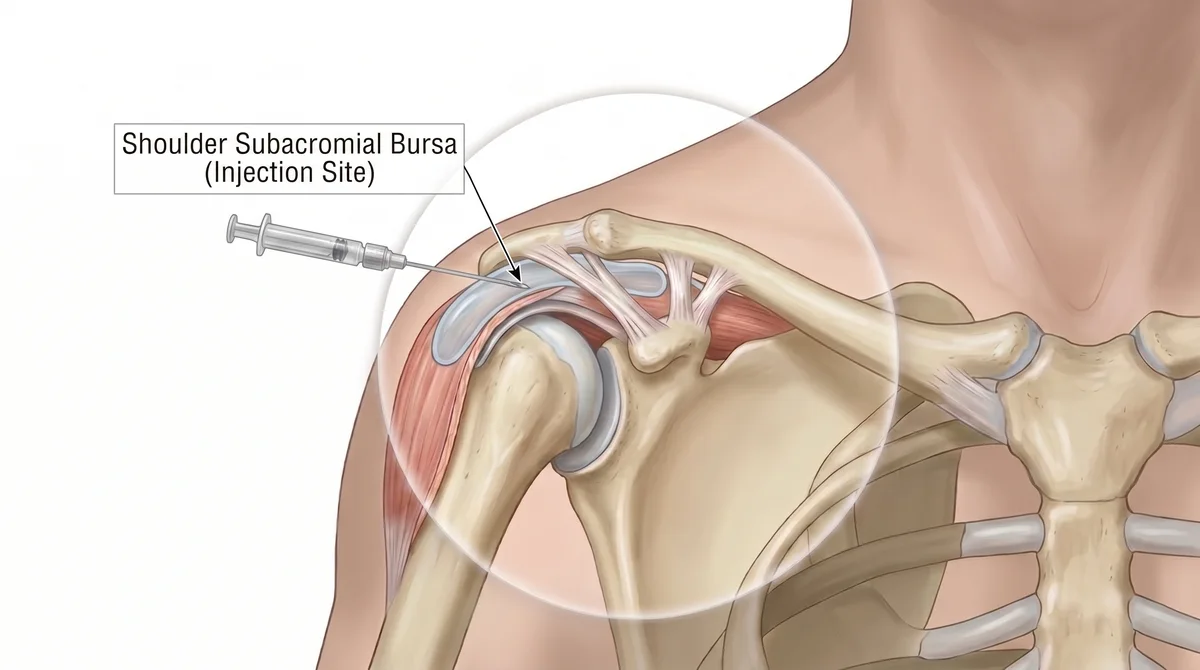
- Subacromial bursa, also called the subacromial–subdeltoid bursa
The diagnosis should drive the target. Injecting a nearby space without confirming that it matches the pain pattern is unlikely to produce a useful answer.
All PRP injections are image-guided. Glenohumeral and AC joint injections use ultrasound or fluoroscopy, selected according to the case. A subacromial–subdeltoid bursa injection uses ultrasound.
What the evidence shows
For glenohumeral osteoarthritis, a small randomized trial found improvement after both leukocyte-poor PRP and hyaluronic acid, without a clear difference between them. That is encouraging but not enough to establish a standard PRP protocol.
Evidence for AC joint and subacromial bursa injections is more limited and often overlaps with studies of rotator cuff-related pain. For rotator cuff tendinopathy and partial tears, the 2025 AAOS guideline does not support routine PRP use because findings are inconsistent.
Possible benefits and limits
The intended benefit is reduced pain and improved function. PRP does not guarantee that cartilage, tendon, or labrum will regrow. Response may be incomplete or absent, and improvement—if it occurs—may take time.
PRP is often self-pay. Patients should understand cost, alternatives, the proposed target, and what result would count as success before proceeding.
Number of treatments
PRP is usually performed as one treatment. Any repeat is considered only after the response, diagnosis, goals, and alternatives have been reviewed. An automatic series is not scheduled.
Risks and preparation
Risks include blood-draw symptoms, post-injection flare, bleeding, infection, injury to nearby structures, and lack of benefit.
NSAIDs can affect the intended biologic response. The exact stop and restart timing is provided in the procedure handout rather than on this general page. Do not stop prescribed aspirin, antiplatelet medication, or an anticoagulant unless the prescribing and procedural clinicians give coordinated instructions.
Sources
- Randomized Trial: PRP Versus Hyaluronic Acid for Glenohumeral Osteoarthritis
- AAOS 2025 Clinical Practice Guideline: Rotator Cuff Injuries
- Systematic Review: PRP for Partial-Thickness Rotator Cuff Tears
The exact medication and aftercare protocol is provided in the procedure handout. No outcome is guaranteed.
Clinically reviewed by Keley John Booth, MD
Get urgent care for these
- The shoulder looks deformed or a bone may be broken after an injury
- The arm is cold, pale, blue or severely swollen
- New major weakness or loss of feeling
- Fever with a hot, red, swollen shoulder
- Shoulder pain with chest pressure, shortness of breath, sweating, or pain spreading to the jaw or arm
These need assessment now, not an appointment next week. Go to an emergency department or call 911.