
Neck treatment
Occipital Nerve Block for Headache Relief | Elite Pain & Health – Oklahoma
Occipital Nerve Block for Headache Relief

If your headaches begin at the base of the skull and radiate upward, you may be experiencing pain from irritated nerves in your upper neck not just tension or migraine. This condition, known as occipital neuralgia or cervicogenic headache, can cause sharp, stabbing pain that interferes with concentration, sleep, and quality of life.
An Occipital Nerve Block is a quick, image-guided injection designed to calm those irritated nerves and provide rapid, non-surgical relief. At Elite Pain & Health – Oklahoma, Dr. Keley John Booth uses precise ultrasound guidance to deliver targeted medication to the greater and lesser occipital nerves, relieving pain and confirming the nerve-based source of your headaches.

Why It Happens

The greater and lesser occipital nerves emerge from the upper cervical spine (usually between C2 and C3) and travel through muscles and connective tissue at the back of the head to supply sensation to the scalp.
When these nerves are compressed, inflamed, or irritated, they can cause pain that radiates upward into the scalp and around the eyes a pattern often mistaken for migraine.

Common causes include:
-
Whiplash injuries causing upper cervical strain
-
Arthritis or facet joint irritation (C2–C3)
-
Chronic muscle tension in the neck and shoulders
-
Postural strain from prolonged screen use or phone posture
-
Occipital nerve entrapment under tight muscles or fascia
These mechanical and inflammatory problems trigger pain signals that the brain interprets as “headache,” even though the source is in the neck.
What It Feels Like

Patients with occipital nerve irritation often describe:
-
Sharp, shooting, or electric pain starting at the skull base
-
Throbbing or burning pain radiating to the top or side of the head
-
Tenderness over the back of the skull or upper neck
-
Pain behind one or both eyes
-
Scalp sensitivity oar tingling
-
Pain triggered by neck movement, brushing hair, or pressure
These headaches can last from hours to days and may fluctuate in intensity depending on activity or stress.

How It’s Diagnosed

Dr. Booth diagnoses occipital neuralgia using a combination of:

-
Clinical history and symptom mapping – identifying pain patterns typical of occipital nerve irritation
-
Physical examination – palpation for tenderness along the C2–C3 region and occipital ridge
-
Imaging (MRI or DMX) – to identify cervical facet arthritis, instability, or post-whiplash changes
-
Diagnostic Occipital Nerve Block – temporary numbing injection to confirm whether pain originates from these nerves
A successful diagnostic block not only relieves pain but confirms the occipital nerves as the primary pain source.
How the Procedure Works
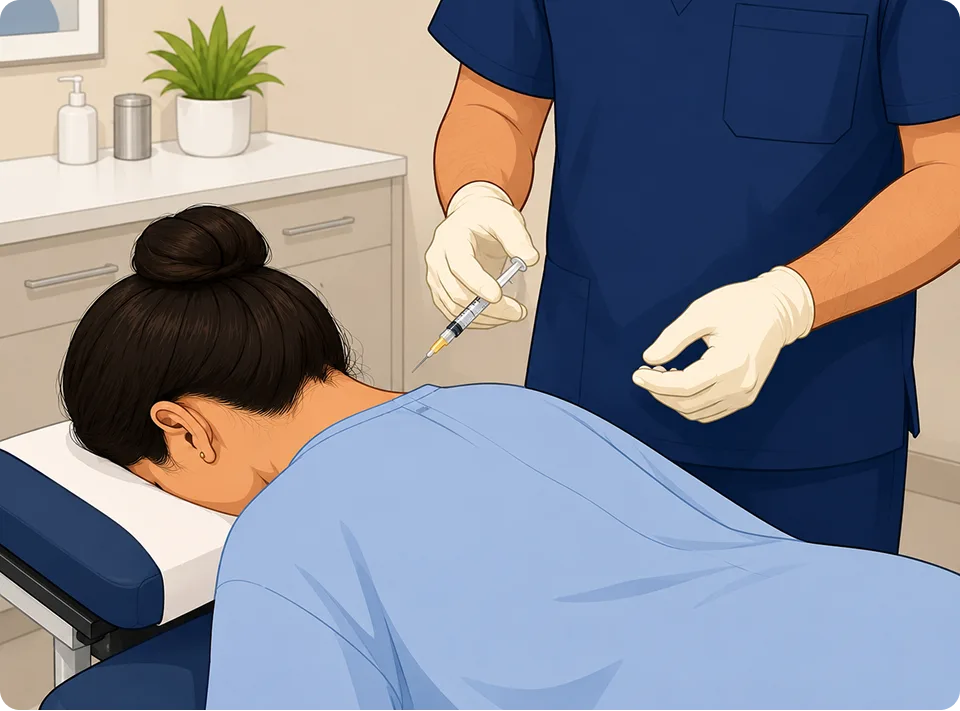
An Occipital Nerve Block is a safe, minimally invasive outpatient procedure performed in Dr. Booth’s interventional suite.
Step-by-step:
-
Preparation: You’ll sit or lie comfortably while the skin is cleaned and numbed.
-
Ultrasound Guidance: Dr. Booth uses real-time ultrasound to locate the occipital nerves as they pass through the muscle and connective tissue layers.
-
Precise Injection: A small needle is used to inject a mixture of local anesthetic (and sometimes a small amount of steroid or PRP) directly around the affected nerves.
-
Observation: Pain relief is usually felt within minutes. You’ll rest briefly before going home.
The entire process takes about 10–15 minutes*, and no sedation is required.*
Why It’s Effective
Occipital nerve blocks relieve pain by interrupting the cycle of nerve inflammation, muscle spasm, and referred pain.

They provide both diagnostic and therapeutic benefit:
-
Diagnostic: Confirms the occipital nerves are the source of pain.
-
Therapeutic: Reduces nerve inflammation and muscle tension for lasting relief.
Many patients experience significant pain reduction within minutes*, lasting anywhere from* weeks to several months*, depending on the cause and chronicity of their condition.*
Recovery and Results
-
Immediate effects: Temporary numbness and warmth in the scalp are normal.
-
Activity: Most patients return to work or daily activity the same day.
-
Relief duration: Ranges from several weeks to months; repeat injections can maintain results.
-
Next steps: If pain returns, patients may consider regenerative orthobiologic therapy or upper cervical facet injection for deeper structural healing.
Regular stretching, posture correction, and ergonomics can further extend the benefits.

When to Seek Care

You may be a candidate for an Occipital Nerve Block if you experience:
-
Headaches that start at the neck or skull base
-
Pain unresponsive to migraine medication
-
Post-whiplash headaches or scalp tenderness
-
Neck pain that triggers head pain
-
Sensitivity behind the eyes or upper neck
Early evaluation can prevent chronic nerve sensitization and long-term headache patterns.
Restore Your Neck Mobility Today
If you’re living with chronic headaches that start in your neck, there’s a better solution than long-term medication.
At Elite Pain & Health – Oklahoma, Dr. Keley John Booth uses precise, image-guided occipital nerve blocks to identify and treat the true cause of cervicogenic headaches safely, quickly, and effectively.
Get urgent care for these
- New weakness or clumsiness in the hands, or dropping objects
- Unsteady walking or a change in balance
- Loss of bladder or bowel control
- Neck pain with fever, or after a fall or collision
These need assessment now, not an appointment next week. Go to an emergency department or call 911.
Common questions about neck pain