
Neck condition or diagnosis
Cervical Instability & Ligament Laxity | Elite Pain & Health – Oklahoma
Cervical Instability & Ligament Laxity

After an accident or repetitive strain, some patients notice that their neck feels unstable, “shifts,” or causes dizziness when they move. This isn’t just muscle pain it may indicate cervical instability, a condition where the neck’s supporting ligaments have been overstretched or damaged.
Dr. Keley John Booth, interventional spine and musculoskeletal specialist at Elite Pain & Health – Oklahoma, uses advanced imaging such as Digital Motion X-ray (DMX) and regenerative medicine to diagnose and treat cervical ligament laxity helping patients restore stability naturally, without fusion surgery.

Why It Happens

Your cervical spine is stabilized by a complex network of ligaments strong, fibrous bands
that keep vertebrae aligned while allowing motion.

When these ligaments are overstretched or torn, the vertebrae can move excessively relative to one another, creating mechanical irritation of joints, discs, and nerves.
Common causes include:
-
Whiplash or motor vehicle collisions (rapid acceleration–deceleration)
-
Sports injuries or falls
-
Repetitive microtrauma from poor posture or heavy lifting
-
Degenerative disc disease or spondylosis weakening ligament support
-
Connective tissue disorders (e.g., Ehlers-Danlos Syndrome, less common)
-
Gentle Stretching: Performed correctly, gentle neck stretches gradually restore lost range of motion. These should be done slowly and carefully, never forcing movement through pain.
Instability most often occurs at C1–C2 (atlantoaxial) and C4–C6 levels the most mobile parts of the neck. The result is chronic pain, muscle guarding, and sometimes nerve or vascular irritation.
What It Feels Like

Cervical instability symptoms are variable but often include:
-
Deep, aching neck pain or heaviness
-
“Clicking,” “popping,” or shifting sensations when moving the head
-
Headache or occipital pain radiating from the upper neck
-
Dizziness, lightheadedness, or visual disturbance (especially with rotation)
-
Pain or tightness in the shoulders and upper back
-
Muscle fatigue or tremor sensation when holding the head upright
-
Intermittent numbness, tingling, or jaw/facial symptoms
Many patients describe it as feeling like “my neck won’t hold up my head.”

How It’s Diagnosed
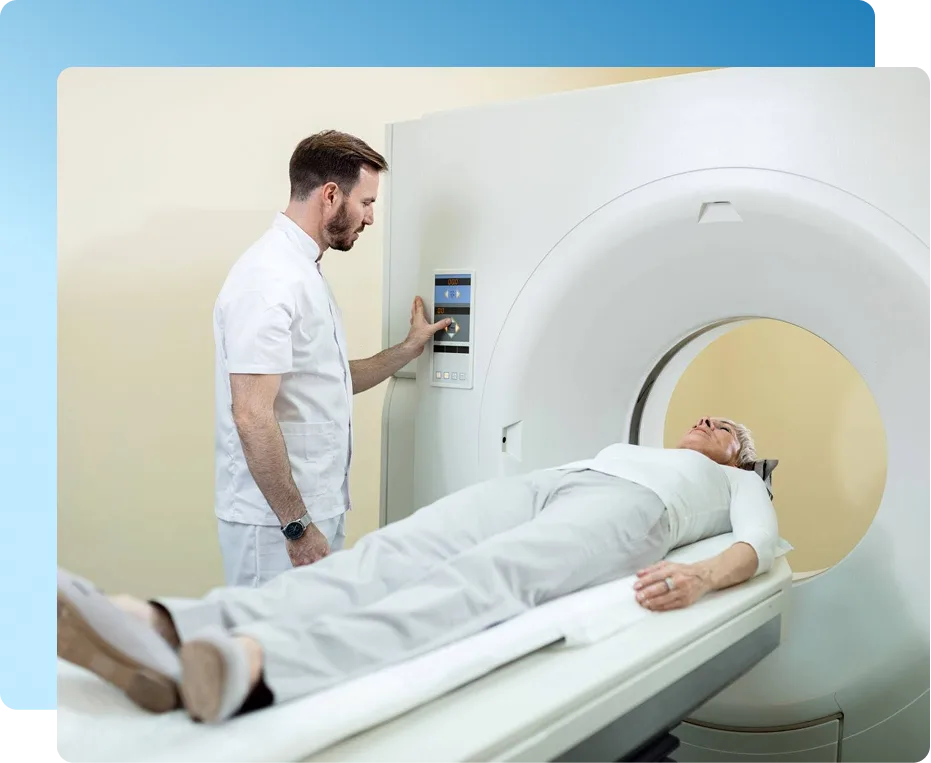
Cervical instability can be subtle and is often missed on static MRI or X-ray. Dr. Booth emphasizes motion-based imaging and targeted clinical testing to detect the problem accurately.
Diagnostic steps include:
-
Comprehensive physical exam – assessing posture, range of motion, and pain provocation
-
Neurologic testing – to check for nerve irritation or spinal cord involvement
-
Digital Motion X-ray (DMX) – dynamic fluoroscopy that shows ligamentous laxity during real-time motion
-
High-resolution MRI or CT scan – to evaluate disc and facet joint integrity
-
Diagnostic facet or medial branch blocks – confirming whether instability-related joint inflammation contributes to pain
DMX is particularly valuable because it visualizes subtle excessive translation or angulation between vertebrae signs of true ligament injury invisible on traditional imaging.
Conservative Treatment
Dr. Booth’s treatment philosophy centers on stabilizing the spine without fusion surgery, using a combination of regenerative and biomechanical restoration techniques.
Stepwise, non-surgical management includes:
-
Stabilization and Postural Therapy: ○ Targeted physical therapy to strengthen deep cervical stabilizers and scapular support muscles
○ Postural retraining for screen, work, and driving ergonomics
-
Bracing or Cervical Support (Short-Term): ○ Used briefly in acute post-whiplash cases to reduce motion and promote ligament healing
-
Regenerative Medicine (Core Therapy): ○ Platelet-Rich Plasma (PRP) or Orthobiologic Cell Therapy precisely injected under fluoroscopy into the injured ligaments and facet capsules
○ Stimulates collagen repair and long-term ligament tightening
○ Often performed in a series for cumulative strengthening

-
Image-Guided Interventional Procedures: ○ Facet joint or medial branch blocks to calm secondary pain
○ Radiofrequency ablation (RFA) for chronic nerve irritation contributing to spasm
-
Lifestyle and Activity Modification: ○ Avoid excessive neck manipulation or heavy lifting during recovery
○ Focus on controlled mobility rather than immobilization
Dr. Booth’s approach is designed to restore natural motion and stability while minimizing medication and surgical risk.
When to Seek Care
You should be evaluated for cervical instability if you experience:
-
Neck pain that worsens with movement or fatigue
-
Popping or grinding sensations with head rotation
-
Dizziness, visual changes, or “brain fog” after whiplash
-
Headaches starting from the upper neck
-
Persistent pain despite normal MRI results
Early diagnosis prevents chronic nerve irritation, postural imbalance, and degenerative progression.
Take the Next Step
If your neck feels unstable, clicks with movement, or causes dizziness after injury, you may have cervical ligamentous instability.
At Elite Pain & Health Oklahoma, Dr. Booth specializes in advanced, non-surgical diagnostics and regenerative stabilization therapies that repair ligaments, restore confidence, and help patients reclaim active lives safely.
Get urgent care for these
- New weakness or clumsiness in the hands, or dropping objects
- Unsteady walking or a change in balance
- Loss of bladder or bowel control
- Neck pain with fever, or after a fall or collision
These need assessment now, not an appointment next week. Go to an emergency department or call 911.
Common questions about neck pain