
Neck symptom
Numbness and Tingling in Your Arms and Hands from Your Neck | Elite Pain & Health – Oklahoma
Numbness and Tingling in Your Arms and Hands from Your Neck

Waking up with numb hands, experiencing tingling fingers while working at your computer, or feeling pins-and-needles sensations radiating down your arm can be more than just annoying these symptoms often signal that nerves in your neck are under pressure or not functioning properly. While many people assume hand numbness comes from carpal tunnel syndrome, the real culprit is frequently nerve compression originating in the cervical spine.
At Elite Pain & Health, Dr. Keley John Booth, MD, specializes in identifying the true source of arm and hand numbness through precise diagnostic techniques. Understanding why your neck is causing symptoms in your hands and getting the right treatment can restore normal sensation and prevent permanent nerve damage.

Why It Happens

Numbness and tingling in your arms and hands occur when the nerves traveling from your cervical spine (neck) to your upper extremities become compressed, irritated, or inflamed. Your cervical spine contains eight pairs of nerve roots (C1-C8) that branch from the spinal cord and provide sensation and motor control to specific areas of your shoulders, arms, hands, and fingers.
Common Causes Include:
-
Cervical Disc Herniation: When the soft inner material of a spinal disc pushes through its outer layer, it can compress adjacent nerve roots. This pressure disrupts normal nerve signaling, causing numbness, tingling, or a “falling asleep” sensation in the distribution of the affected nerve. Disc herniations most commonly occur at C5-C6 and C6-C7 levels.
-
Cervical Spinal Stenosis: Narrowing of the spinal canal or the neural foramina (openings where nerves exit the spine) reduces space for nerves and can compress multiple nerve roots simultaneously. This condition typically develops gradually due to age-related changes and may cause numbness in both arms, though symptoms often start on one side.
-
Degenerative Disc Disease: As discs lose height and hydration with age, vertebrae move closer together, potentially compressing nerve roots. The body’s response includes forming bone spurs (osteophytes) that can further narrow nerve pathways and contribute to numbness and tingling.

-
Cervical Spondylosis (Neck Arthritis): Arthritis in the facet joints of the neck can cause inflammation that irritates nearby nerves. Additionally, arthritic changes lead to bone spur formation that encroaches on nerve root exit zones, creating compression.
-
Poor Posture and Forward Head Position: Prolonged forward head posture—increasingly common with computer work and smartphone use places abnormal mechanical stress on cervical structures. This sustained position can compress nerves directly and reduce blood flow to nerve tissue, causing intermittent numbness and tingling.
-
Thoracic Outlet Syndrome: Compression of nerves or blood vessels in the space between the collarbone and first rib can cause numbness and tingling in the arm and hand, often mimicking cervical nerve root compression. This condition can coexist with cervical spine problems.
-
Cervical Myelopathy: When the spinal cord itself becomes compressed within the cervical canal, it can cause numbness and tingling in both hands, often accompanied by balance problems, difficulty with fine motor tasks like buttoning shirts, and weakness in the legs. This is a more serious condition requiring urgent evaluation.
The specific pattern of numbness helps identify which nerve is affected. For example, C6 nerve root compression typically causes numbness in the thumb and index finger, while C8 compression affects the ring and little fingers.
What It Feels Like

Numbness and tingling from cervical nerve compression manifests in distinctive patterns that help differentiate it from other causes of hand symptoms like carpal tunnel syndrome or peripheral neuropathy.
Typical Symptoms Include:

-
Pins-and-Needles Sensations: Many patients describe a tingling feeling similar to when your arm “falls asleep,” except it doesn’t resolve with position changes or shaking your hand. The sensation follows the pathway of the compressed nerve from your neck down your arm.
-
Numbness in Specific Finger Patterns: Unlike carpal tunnel syndrome, which primarily affects the thumb, index, and middle fingers, cervical nerve compression follows dermatomal patterns. C6 radiculopathy causes numbness in the thumb and index finger, C7 affects the middle finger, and C8 involves the ring and little fingers.
-
Variable Intensity: Symptoms often fluctuate throughout the day, worsening with certain neck positions or activities. Many patients notice increased numbness when looking down at phones, working at computers, or lying in certain positions at night.
-
Night-Time Worsening: Numbness and tingling frequently intensify during sleep, often waking patients. This occurs because neck position during sleep can increase pressure on already-compressed nerves.
-
Positional Changes: Symptoms may improve or worsen based on head and neck position. Some patients find relief by placing their hand on top of their head, which reduces tension on compressed nerve roots. Conversely, extending the neck backward or turning the head toward the affected side typically increases symptoms.
-
Reduced Sensation: Beyond tingling, you may notice decreased ability to feel temperature, texture, or light touch in affected areas. Some patients describe their hand feeling “thick” or “wrapped in gauze.”
-
Associated Symptoms: Numbness and tingling rarely occur in isolation. You may also experience neck pain, shoulder blade discomfort, arm weakness, difficulty with grip strength, or clumsiness when performing fine motor tasks like buttoning clothing or writing.
-
Bilateral Symptoms: While cervical radiculopathy typically affects one arm, cervical spinal stenosis or myelopathy can cause numbness and tingling in both hands simultaneously. Bilateral symptoms warrant more urgent evaluation.

The key distinction from carpal tunnel syndrome is that cervical-origin numbness typically includes the neck or shoulder blade area and follows nerve root distribution patterns rather than median nerve distribution.
How It’s Diagnosed
Dr. Booth employs a systematic diagnostic approach to determine whether your numbness and tingling originate from your neck, peripheral nerves, or a combination of sources. Accurate diagnosis is essential because treatment differs significantly based on the underlying cause.
Comprehensive Clinical Evaluation:
-
Detailed Symptom History: Dr. Booth will ask specific questions about when symptoms began, which fingers are affected, what positions worsen or relieve symptoms, whether you experience night-time awakening, and if you’ve noticed weakness or clumsiness.
-
Neurological Assessment: Testing includes evaluation of sensation in each finger and specific dermatomal regions, muscle strength testing in the arms and hands, deep tendon reflex assessment, and coordination tests. Dr. Booth compares findings between your affected and unaffected sides to identify patterns consistent with specific nerve root involvement.
-
Provocative Testing: Specialized maneuvers help confirm the diagnosis:
● Purling’s Test: Gently compressing and tilting your head toward the affected side reproduces symptoms if nerve root compression is present ● Shoulder Abduction Relief Sign: Placing your hand on top of your head relieves symptoms in many cases of cervical radiculopathy ● Upper Limb Tension Tests: Specific positioning of your arm and neck can reproduce symptoms and confirm neural involvement
-
Differential Diagnosis: Dr. Booth will also assess for other conditions that can cause similar symptoms, including carpal tunnel syndrome, cubital tunnel syndrome (ulnar nerve compression at the elbow), peripheral neuropathy, or thoracic outlet syndrome.

Advanced Diagnostic Imaging


-
MRI (Magnetic Resonance Imaging): The gold standard for evaluating cervical spine structures, MRI clearly visualizes disc herniations, spinal stenosis, nerve root compression, spinal cord involvement, ligament thickening, and inflammatory changes. MRI provides detailed soft tissue imaging without radiation exposure.
-
X-rays: Cervical spine X-rays evaluate bone alignment, vertebral spacing, evidence of arthritis or bone spurs, disc space height, and structural stability. Dynamic (flexion-extension) X-rays can reveal instability.
-
CT Scan: Computed tomography provides superior bone detail compared to X-rays and can be combined with myelography (contrast dye injection) to visualize nerve root compression when MRI is contraindicated.
-
Electrodiagnostic Studies (EMG/NCS): Nerve conduction studies and electromyography are essential when the diagnosis is unclear or multiple nerve compression sites are suspected. These tests:
● Measure nerve signal speed and strength
● Identify which specific nerves are affected
● Distinguish between cervical radiculopathy and peripheral nerve compression
● Assess severity of nerve damage
● Detect whether muscle weakness is present
EMG/NCS can distinguish cervical radiculopathy from carpal tunnel syndrome, cubital tunnel syndrome, or peripheral neuropathy conditions that often coexist with cervical spine problems.
Why Accurate Diagnosis Matters

Treatment for cervical-origin numbness differs significantly from treatment for carpal tunnel syndrome. Treating the wrong condition delays relief and may lead to unnecessary surgery. Dr. Booth’s comprehensive approach ensures you receive targeted treatment addressing the actual source of your symptoms.
Conservative Treatment Options
Most patients with numbness and tingling from cervical nerve compression experience significant improvement with non-surgical treatment. Dr. Booth’s stepwise approach focuses on reducing nerve inflammation, improving cervical spine mechanics, and restoring normal nerve function.
First-Line Conservative Care:
-
Posture Correction and Ergonomics: Addressing forward head posture is crucial. This includes workspace ergonomic modifications, proper computer monitor height and positioning, frequent position changes throughout the day, sleeping position optimization, and avoiding prolonged downward head tilt (such as looking at phones).
-
Physical Therapy: A specialized cervical spine rehabilitation program includes neck and shoulder blade strengthening exercises, cervical traction to reduce nerve root pressure, manual therapy techniques to improve joint mobility, nerve gliding exercises to reduce neural tension, and postural retraining for long-term prevention.
-
Activity Modification: Temporary avoidance of activities that provoke symptoms allows inflamed nerves to recover. This may include modifying overhead activities, limiting prolonged neck extension, taking frequent breaks during computer work, and avoiding heavy lifting.
-
Medications:
● Anti-inflammatory Drugs (NSAIDs): Reduce inflammation around compressed nerves
● Neuropathic Pain Medications: Drugs like gabapentin or pregabalin specifically target nerve-related symptoms including numbness and tingling
● Muscle Relaxants: May help if muscle spasm contributes to nerve compression
● Short-term Oral Corticosteroids: Can reduce acute nerve inflammation in severe cases
-
Cervical Collar (Limited Use): Brief use of a soft collar during acute flare-ups provides rest, but prolonged use weakens neck muscles and should be avoided.

Advanced Interventional Treatments:
When conservative measures provide inadequate relief, Dr. Booth offers precise, image-guided procedures:
-
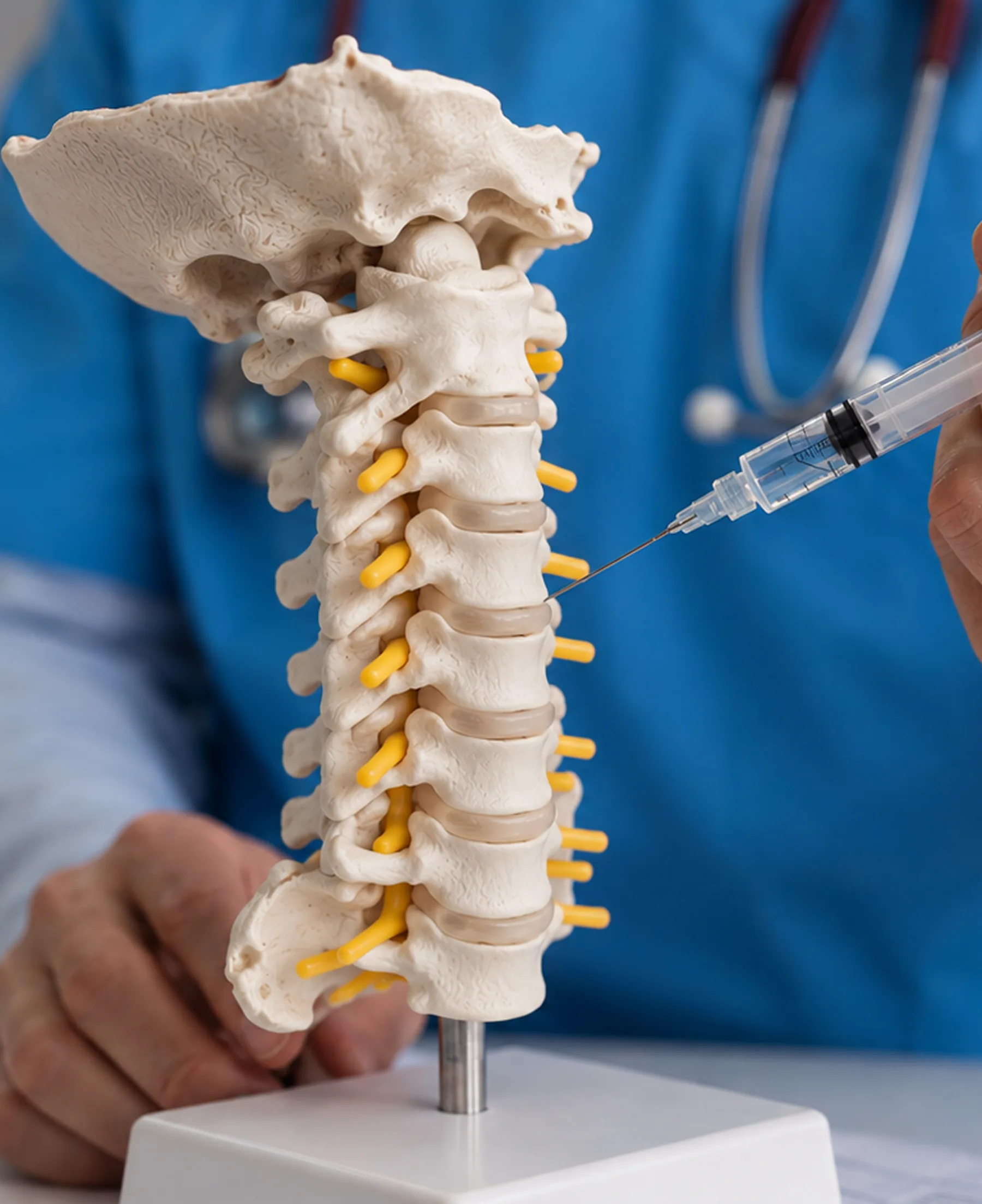
Cervical Epidural Steroid Injections: Powerful anti-inflammatory medication delivered directly to the inflamed nerve root under fluoroscopic guidance. This treatment reduces nerve swelling and often provides rapid improvement in numbness, tingling, and pain, allowing more effective participation in physical therapy.
-
Selective Nerve Root Blocks: Targeted injections at the specific nerve root causing symptoms provide both diagnostic confirmation and therapeutic relief. These injections precisely deliver medication to the compressed nerve.
-
Cervical Facet Joint Injections: When facet joint arthritis contributes to nerve irritation, targeted injections reduce inflammation and improve neck mechanics.
-
Transforaminal Epidural Steroid Injections: These highly targeted injections deliver medication directly into the neural foramen where nerve compression occurs, providing concentrated anti-inflammatory effect at the precise site of pathology.
Regenerative Medicine
Platelet-Rich Plasma (PRP) Therapy: Concentrated healing factors from your own blood promote natural repair of damaged disc tissue and reduce chronic inflammation without surgery or long-term medication risks.
Treatment Goals:
Dr. Booth’s treatment philosophy emphasizes restoring normal nerve function, preventing permanent nerve damage, avoiding unnecessary surgery, addressing underlying causes rather than just masking symptoms, and returning you to full function and normal sensation.
Most patients experience significant improvement within 4-8 weeks of starting treatment, though some notice relief much sooner, especially with targeted injections combined with physical therapy.
When to Seek Immediate Care
While most cases of cervical-origin numbness improve with conservative treatment, certain warning signs indicate urgent or emergent conditions requiring immediate evaluation.
Seek Emergency Care Immediately If You Experience:
-
Progressive Weakness: Rapidly worsening arm or hand weakness, especially difficulty gripping objects or inability to lift your arm
-
Loss of Bowel or Bladder Control: Suggests spinal cord compression a neurosurgical emergency
-
Numbness in Both Hands Plus Leg Symptoms: May indicate cervical myelopathy (spinal cord compression)
-
Severe Hand Clumsiness: Sudden onset of dropping objects, inability to button clothing, or difficulty with handwriting
-
Balance or Walking Difficulties: Accompanied by hand numbness suggests spinal cord involvement
-
Symptoms After Trauma: Neck injury followed by numbness warrants immediate imaging to rule out fracture or spinal cord injury
Schedule Evaluation with Dr. Booth If:
-
Numbness and tingling persist longer than two weeks despite home care
-
Symptoms progressively worsen over days or weeks
-
You experience frequent night-time awakening from hand numbness
-
Numbness interferes with work, daily activities, or quality of life
-
You develop new weakness or increasing areas of numbness
-
Previous treatments have provided inadequate relief
-
You want expert evaluation to determine the exact cause of symptoms
-
You’re concerned about permanent nerve damage
Why Early Intervention Matters
Prolonged nerve compression can lead to permanent sensory loss and muscle atrophy. Early, accurate diagnosis and appropriate treatment prevent irreversible nerve damage and avoid the need for surgery in most cases. The sooner you address the underlying cause, the better your chances of complete recovery.
Take the Next Step Toward Restoring Normal Sensation
Don’t let hand numbness and tingling disrupt your life or lead to permanent nerve damage. Dr. Keley John Booth provides comprehensive diagnostic evaluation and effective non-surgical treatment for cervical-origin numbness and tingling at Elite Pain & Health locations throughout Oklahoma.
Get urgent care for these
- New weakness or clumsiness in the hands, or dropping objects
- Unsteady walking or a change in balance
- Loss of bladder or bowel control
- Neck pain with fever, or after a fall or collision
These need assessment now, not an appointment next week. Go to an emergency department or call 911.
Common questions about neck pain