
Neck treatment
Cervical Medial Branch Block (MBB) | Elite Pain & Health – Oklahoma
Cervical Medial Branch Block (MBB)

If you’ve been struggling with chronic neck pain that hasn’t improved with therapy or medication, the challenge may not be finding treatment it’s identifying where the pain truly comes from.
A Cervical Medial Branch Block (MBB) is one of the most accurate diagnostic tools used to pinpoint facet joint–related neck pain. Using image-guided precision, Dr. Keley John Booth at Elite Pain & Health – Oklahoma performs this minimally invasive procedure to confirm the exact joints responsible for your discomfort.
When properly diagnosed, patients can move confidently into effective treatments like radiofrequency ablation (RFA) or regenerative therapy without guesswork or unnecessary surgery.

Why It Happens

Your cervical spine contains small stabilizing joints called facet joints at each vertebral level. These joints allow your neck to bend, rotate, and extend smoothly. When they become irritated due to arthritis, whiplash, postural stress, or disc degeneration they can trigger pain that radiates to the shoulders, upper back, or head.
Each facet joint is innervated by tiny sensory nerves called medial branch nerves. These nerves transmit pain signals from the joint to your brain. A medial branch block temporarily numbs these nerves, helping Dr. Booth determine if the facet joint is indeed the source of your pain.
What It Feels Like

Facet-mediated pain typically presents as:
-
Dull, aching neck pain often localized near the spine
-
Stiffness that limits turning or looking up/down
-
Pain radiating to the shoulder or base of the skull
-
Worsening pain with driving, reading, or prolonged sitting
-
Headaches beginning in the upper neck (cervicogenic headaches)
Because these symptoms can mimic disc or nerve pain, diagnostic precision is essential before any long-term treatment.

How It’s Diagnosed and Performed
A Cervical Medial Branch Block serves both diagnostic and therapeutic purposes.
-
Consultation & Imaging Review: Dr. Booth first reviews your imaging (MRI, X-ray, or DMX) to locate potential arthritic or inflamed joints. A physical exam identifies pain patterns consistent with facet involvement.
-
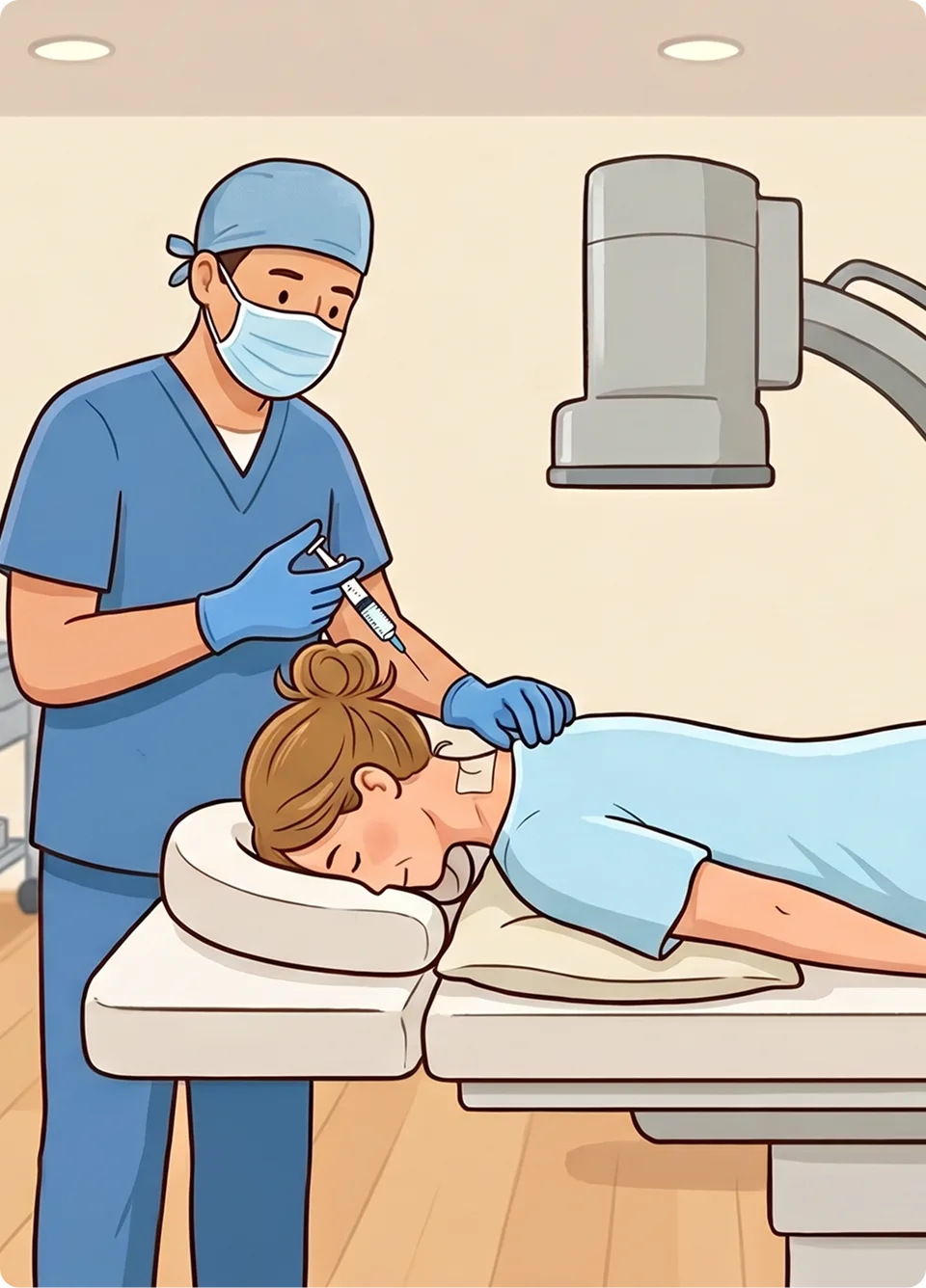
Preparation: The procedure is performed in an outpatient fluoroscopy suite. You’ll lie face down while your neck is cleaned and draped in sterile fashion.
-
Image-Guided Injection: Using live fluoroscopic (X-ray) guidance, Dr. Booth carefully positions a thin needle alongside the small medial branch nerve that carries pain from the targeted joint. A small amount of local anesthetic (numbing medicine) is injected.
● No steroids are used at this stage—this ensures the response is diagnostic, not therapeutic.
● The procedure typically takes 10–20 minutes.
-
Pain Response Monitoring: You’ll record your pain relief over the next few hours. If you experience >80% temporary pain reduction, this confirms that the targeted facet joint is the true pain generator.
-
Treatment Planning: A positive response to the medial branch block indicates that you’re an excellent candidate for Cervical Radiofrequency Ablation (RFA), which provides longer-term relief by safely deactivating those same nerves.
Why It’s So Effective

The value of the medial branch block is in diagnostic precision.
Instead of treating symptoms broadly, Dr. Booth uses this test to:

-
Verify the exact joints responsible for pain
-
Avoid unnecessary procedures
-
Predict success for more permanent therapies like RFA
-
Guide regenerative or facet-focused treatments precisely
This stepwise approach ensures safer, longer-lasting, and more cost-effective outcomes.
Recovery and Results
-
Immediate results: Relief is usually felt within minutes if the correct nerves are numbed.
-
Duration: Relief typically lasts only for the anesthetic’s duration (4–8 hours).
-
Next steps: If results are positive, Dr. Booth may schedule a confirmatory second block or proceed with Radiofrequency Ablation for sustained benefit.

Patients often describe the experience as “eye-opening” because it finally identifies the real pain source after months (or years) of uncertainty.
When to Seek Care

You may benefit from a Cervical Medial Branch Block if:
-
You have chronic neck pain not radiating past the shoulders
-
You have a history of whiplash or cervical arthritis
-
Previous injections or medications haven’t helped
-
Imaging suggests facet arthropathy or degenerative changes
-
You are considering radiofrequency ablation but need confirmation
Restore Your Neck Mobility Today
If you’ve been living with unexplained or persistent neck pain, a Cervical Medial Branch Block can finally reveal why.
At Elite Pain & Health – Oklahoma, Dr. Keley John Booth performs every procedure with precision, safety, and clarity helping you move forward with confidence toward lasting pain relief.
Get urgent care for these
- New weakness or clumsiness in the hands, or dropping objects
- Unsteady walking or a change in balance
- Loss of bladder or bowel control
- Neck pain with fever, or after a fall or collision
These need assessment now, not an appointment next week. Go to an emergency department or call 911.
Common questions about neck pain