
Neck symptom
Sharp, Burning Neck Pain with Shoulder Blade Pain | Elite Pain & Health – Oklahoma
Sharp, Burning Neck Pain with Shoulder Blade Pain

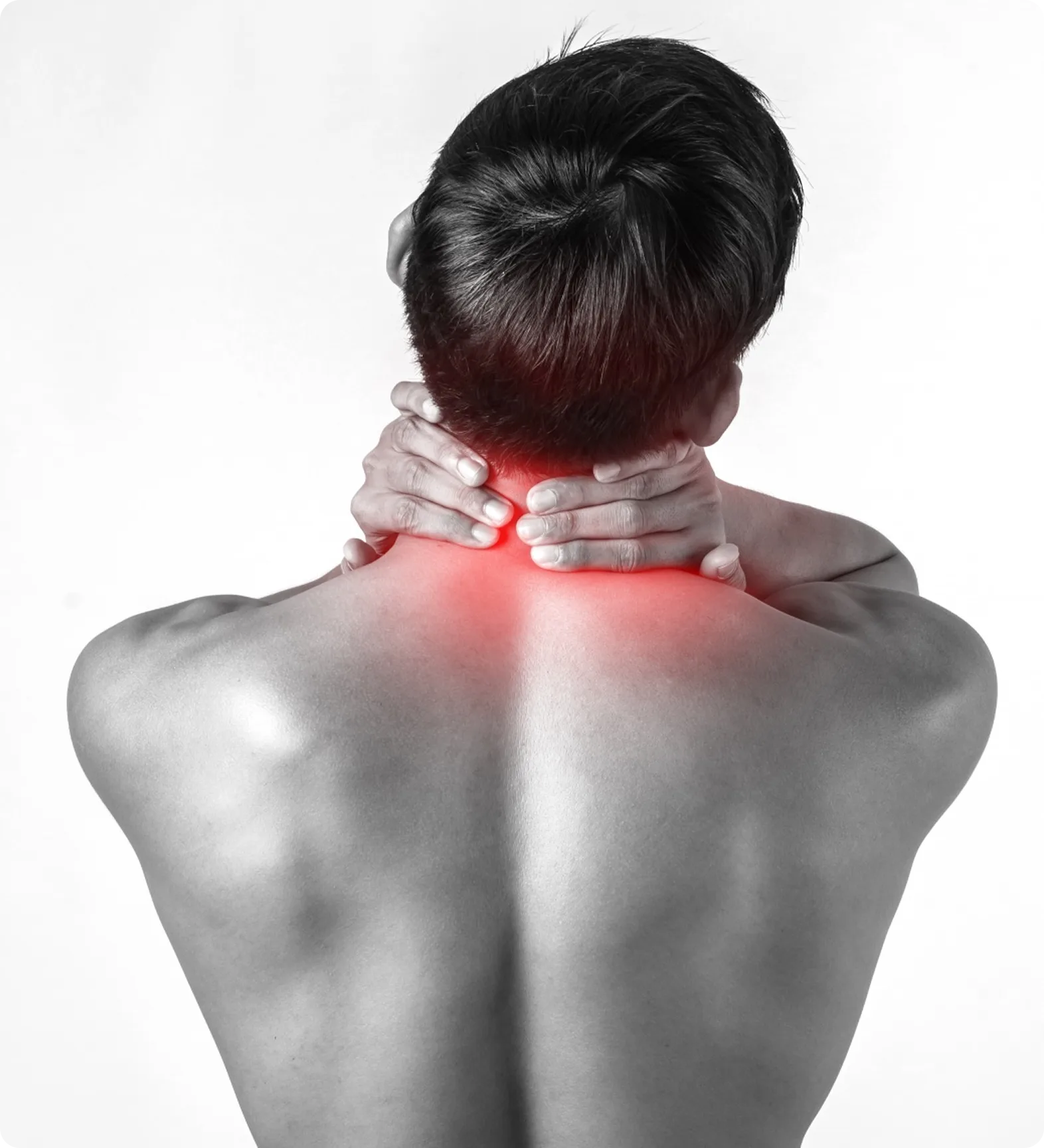
That deep, burning ache between your shoulder blade and spine often accompanied by sharp neck pain is one of the most common yet misunderstood pain patterns affecting the cervical and upper thoracic regions. Whether the pain feels like a hot poker between your shoulder blades, sharp stabbing sensations when you turn your neck, or a constant burning that won’t go away, this specific symptom pattern typically signals nerve irritation, facet joint dysfunction, or myofascial trigger points originating from your cervical spine.
At Elite Pain & Health, Dr. Keley John Booth, MD, specializes in identifying the precise source of neck and shoulder blade pain through advanced diagnostic techniques. Understanding why this pain pattern develops and targeting the actual cause rather than just the symptoms leads to lasting relief without surgery in most cases.
Why It Happens

Sharp, burning neck pain that radiates to or is accompanied by shoulder blade pain results from several interconnected cervical spine structures. The periscapular region (around the shoulder blade) receives nerve supply from the lower cervical spine (C5-C7) and upper thoracic spine (T1-T4), making it a common area for referred pain from neck problems.
Common Causes Include:
-
Cervical Facet Joint Syndrome: The small paired joints connecting adjacent vertebrae in your neck can become inflamed due to arthritis, injury, or repetitive strain. Facet joint inflammation creates a characteristic pain pattern: localized neck pain that refers to the shoulder blade region, often described as deep, aching, or burning. The C5-C6 and C6-C7 facet joints most commonly refer pain to the medial (inner) border of the shoulder blade. This pain typically worsens with neck extension (looking up) and rotation toward the painful side.
-
Cervical Disc Herniation or Bulge: When disc material protrudes beyond its normal boundaries, it can irritate adjacent nerve roots or cause inflammatory chemicals to leak onto sensitive structures. Even without direct nerve compression, disc problems trigger protective muscle spasm and inflammation that manifest as burning pain in the neck and referred pain to the shoulder blade area. The C5-C6 and C6-C7 disc levels most frequently cause this pain pattern.
-
Cervical Radiculopathy (Pinched Nerve): Compression or irritation of cervical nerve roots particularly C5, C6, or C7—commonly causes shoulder blade pain as part of the symptom complex. Approximately 50% of patients with cervical radiculopathy report significant shoulder blade pain. The pain is often described as burning, aching, or gnawing and doesn’t respond to typical shoulder stretches or massage. This referred pain occurs because the nerve root shares neurological connections with the scapular region.

-
Myofascial Pain Syndrome and Trigger Points: Hyperirritable spots within neck and shoulder muscles develop in response to poor posture, overuse, or stress. Common trigger point locations include the levator scapulae (muscle connecting the neck to the shoulder blade), rhomboids (muscles between the spine and shoulder blade), and trapezius (large muscle covering the upper back). These trigger points cause characteristic referred pain patterns, with neck trigger points commonly referring burning or aching pain to the shoulder blade region.
-
Cervical Spondylosis (Neck Arthritis): Degenerative changes in cervical discs and facet joints cause chronic inflammation that activates pain pathways extending to the periscapular region. Bone spurs that develop with arthritis can also narrow nerve exit pathways (foraminal stenosis), causing nerve irritation that manifests as burning pain in the neck and shoulder blade.
-
Poor Posture and Forward Head Position: Sustained forward head posture ubiquitous with computer work and smartphone use places enormous stress on lower cervical structures. For every inch the head moves forward from neutral alignment, the effective weight on the cervical spine increases by approximately 10 pounds. This sustained abnormal loading strains facet joints, overstretches posterior neck muscles, and creates trigger points, all contributing to the sharp, burning pain pattern.
-
Thoracic Spine Dysfunction: Problems in the upper thoracic spine (T1-T4) can cause pain that mimics cervical origin pain. Thoracic facet joint dysfunction, costovertebral joint problems (where ribs attach to the spine), or thoracic disc issues can create burning interscapular pain that patients often attribute to their neck.
-
Nerve Entrapment Syndromes: Less commonly, entrapment of the dorsal scapular nerve (which supplies the rhomboid muscles) or the long thoracic nerve causes burning shoulder blade pain. These peripheral nerve problems often coexist with cervical spine pathology.
The specific quality of your pain sharp versus burning, constant versus intermittent, positional versus unchanging provides important clues about which structures are involved and guides treatment selection.
What It Feels Like

This characteristic pain pattern presents with distinctive features that help differentiate it from primary shoulder pathology (like rotator cuff tears) or lung/cardiac problems.
Typical Symptoms Include:

-
Burning or Aching Pain: Many patients describe a deep, burning sensation in the neck that extends to the medial border (inner edge) of the shoulder blade. The burning quality often indicates nerve involvement or chronic inflammation. The pain feels deep not superficial or skin-level and can be difficult to pinpoint exactly.
-
Sharp, Stabbing Pain with Movement: Certain neck movements particularly extension (looking up), rotation (turning to look over your shoulder), or combined movementstrigger sharp, knife-like pain in the neck that immediately shoots to the shoulder blade. This sharp quality suggests facet joint involvement or nerve root irritation.
-
Constant Ache with Intermittent Sharps: A baseline of moderate burning or aching pain persists throughout the day, punctuated by episodes of sharp, severe pain with specific movements or activities. This pattern is characteristic of facet joint syndrome with associated muscle spasm.
-
Unilateral Symptoms: The pain typically affects one side either right or left neck and shoulder blade though occasionally both sides are involved. Unilateral symptoms suggest facet joint or nerve root pathology, while bilateral symptoms more commonly indicate postural or myofascial causes.
-
Morning Stiffness: Many patients report worst pain and stiffness upon waking, gradually improving through the first hour of the day. This morning predominance suggests inflammatory arthritis or facet joint involvement.
-
Positional Aggravation: Pain significantly worsens with prolonged sitting, computer work, driving, or reading positions that place sustained stress on cervical structures. Lying down or supporting the neck in neutral positions often provides relief.
-
Non-Responsive to Shoulder Stretches: Unlike rotator cuff or shoulder joint problems, this pain doesn’t improve with typical shoulder stretches, arm circles, or shoulder blade squeezes. In fact, some shoulder movements may worsen the pain because they indirectly stress the cervical spine.
-
Trigger Point Tenderness: Firm pressure on specific points in the neck or upper back reproduces or intensifies the familiar shoulder blade pain. The levator scapulae muscle (connecting the neck to the top of the shoulder blade) is a particularly common trigger point location.
-
Associated Neck Symptoms: The shoulder blade pain rarely exists in isolation. Patients typically also experience neck stiffness, reduced range of motion, headaches at the base of the skull, or occasionally arm symptoms like tingling or numbness if nerve roots are involved.
-
Relief with Heat: Many patients report that applying heat to the neck and upper back provides temporary relief, suggesting muscle involvement and inflammation as contributing factors.
-
No Correlation with Breathing: Unlike lung or cardiac problems that can cause interscapular pain, cervical-origin shoulder blade pain doesn’t change with deep breathing, coughing, or exertion. This distinction is important for ruling out serious visceral pathology.
The persistent nature of this pain often lasting weeks to months without appropriate treatment significantly impacts sleep quality, work productivity, and ability to perform daily activities.
How It’s Diagnosed
Dr. Booth employs a systematic diagnostic approach to identify the specific source of your neck and shoulder blade pain, ensuring treatment targets the actual problem rather than just masking symptoms.
Comprehensive Clinical Evaluation:
-
Detailed Pain History: Dr. Booth will ask specific questions about pain onset (sudden versus gradual), exact location and radiation pattern, quality of pain (burning, sharp, aching), aggravating and relieving factors, time of day variations, and impact on daily activities and sleep.
-
Postural Assessment: Evaluating your head, neck, and shoulder position identifies postural contributors. Forward head posture, rounded shoulders, and thoracic kyphosis (excessive upper back curve) all contribute to this pain pattern.
-
Cervical Spine Examination: Comprehensive assessment of neck range of motion, palpation for areas of tenderness, muscle spasm, and trigger points, and provocative maneuvers to reproduce familiar pain patterns. Dr. Booth will carefully examine cervical facet joints, paraspinal muscles, and the shoulder blade region.

-
Neurological Testing: Even when nerve symptoms aren’t obvious, thorough neurological examination checks for subtle nerve involvement. This includes sensation testing in dermatomal patterns, muscle strength assessment in the arms and hands, and deep tendon reflex evaluation.
-
Facet Loading Tests: Special maneuvers apply controlled pressure to facet joints to determine if they’re the pain source. The Spurling test (compression and rotation of the head toward the painful side) can reproduce facet-mediated pain or nerve root symptoms.
-
Trigger Point Examination: Systematic palpation of common trigger point locations identifies hyperirritable spots that reproduce your familiar shoulder blade pain. The “jump sign” (involuntary withdrawal from pressure on a trigger point) is particularly diagnostic.
-
Shoulder Examination: A thorough shoulder evaluation rules out primary shoulder pathology like rotator cuff tears, shoulder impingement, or labral injuries that can coexist with or mimic cervical-origin pain.
Advanced Diagnostic Imaging


-
X-rays: Cervical spine X-rays reveal vertebral alignment, disc space height (indicating disc degeneration), arthritic changes and bone spurs, and structural abnormalities. Oblique views specifically visualize the neural foramina where nerve roots exit the spine.
-
MRI (Magnetic Resonance Imaging): The gold standard for soft tissue visualization, MRI clearly shows disc herniations or bulges, facet joint inflammation and arthritis, nerve root compression, spinal cord and nerve root condition, muscle inflammation or atrophy, and ligamentous injuries.
-
CT Scan: Provides superior bone detail when X-rays are insufficient, particularly for evaluating bony foraminal stenosis or complex arthritic changes.
-
Diagnostic Facet Joint Blocks: When examination and imaging suggest facet joint involvement but diagnosis remains unclear, diagnostic medial branch blocks or intra-articular facet injections definitively identify whether facet joints are the pain source. If the injection temporarily eliminates your pain, facets are confirmed as the primary generator.
-
Electrodiagnostic Studies (EMG/NCS): When nerve involvement is suspected, nerve conduction studies and electromyography assess nerve function, identify specific nerve roots affected, and distinguish between cervical radiculopathy and peripheral nerve problems.
Accurate diagnosis is critical because treatment for facet joint pain differs substantially from treatment for disc herniation, myofascial pain, or nerve compression. Dr. Booth’s comprehensive approach ensures you receive targeted therapy addressing the actual cause.
Conservative Treatment Options
Most patients with sharp, burning neck and shoulder blade pain achieve significant relief through non-surgical treatment. Dr. Booth’s stepwise approach focuses on reducing inflammation, restoring normal mechanics, and preventing recurrence.
First-Line Conservative Care:
-
Posture Correction: Addressing forward head posture is foundational. This includes ergonomic workspace modifications, proper computer monitor positioning at eye level, frequent position changes and movement breaks, sleeping position optimization with appropriate cervical pillow support, and awareness training to maintain neutral head and neck alignment.
-
Physical Therapy: Specialized cervical and thoracic spine rehabilitation includes targeted strengthening of deep neck flexors and scapular stabilizers, manual therapy techniques to improve joint mobility, trigger point release and soft tissue mobilization, postural retraining exercises, and cervical traction when appropriate to reduce facet joint pressure.
-
Anti-inflammatory Medications: NSAIDs like ibuprofen or naproxen reduce inflammation in facet joints, discs, and soft tissues. Prescription anti-inflammatory medications may be necessary for more severe inflammation.
-
Muscle Relaxants: Short-term use helps break the cycle of protective muscle spasm that perpetuates pain. These are particularly helpful for acute exacerbations.

-
Neuropathic Pain Medications: When burning pain suggests nerve involvement, medications like gabapentin or pregabalin specifically target nerve-related pain and often provide substantial relief.
-
Heat and Cold Therapy: Ice reduces acute inflammation in the first 48-72 hours. Heat therapy improves blood flow, relaxes muscles, and provides comfort for chronic symptoms. Many patients benefit from alternating applications.
-
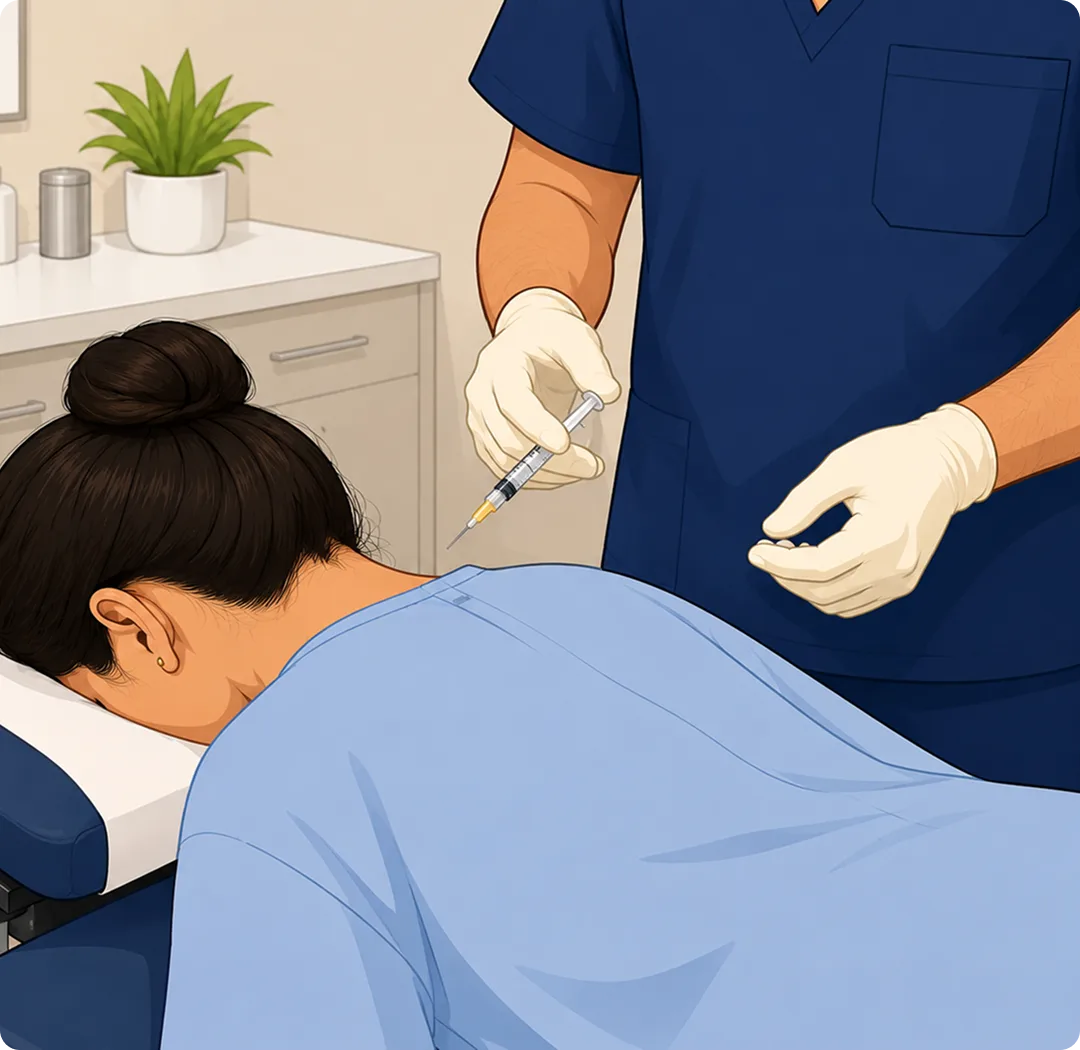
Trigger Point Dry Needling or Injections: Direct treatment of myofascial trigger points through dry needling (without medication) or trigger point injections (with local anesthetic and sometimes corticosteroid) provides immediate relief and restores normal muscle function.
Advanced Interventional Treatments:
When conservative measures provide insufficient relief, Dr. Booth offers precision image-guided procedures:
-
Cervical Facet Joint Injections: Corticosteroid medication delivered directly into inflamed facet joints under fluoroscopic (X-ray) guidance provides powerful anti-inflammatory relief. For many patients, this procedure offers dramatic improvement within days and facilitates more effective participation in physical therapy.
-
Medial Branch Blocks: Diagnostic injections that anesthetize the small nerves supplying painful facet joints. These blocks both confirm the diagnosis and provide temporary relief.
-
Radiofrequency Ablation (RFA): For chronic facet joint pain that responds temporarily to medial branch blocks, radiofrequency ablation uses precisely controlled heat to interrupt pain signals from affected joints. This procedure provides longer-lasting relief typically 6-18 months without the need for repeated injections.
-
Cervical Epidural Steroid Injections: When disc herniation or nerve root inflammation contributes to symptoms, epidural injections deliver powerful anti-inflammatory medication directly to affected nerve roots, reducing inflammation and associated shoulder blade pain.
-
Selective Nerve Root Blocks: Targeted injections at specific nerve roots provide both diagnostic confirmation and therapeutic benefit when radiculopathy contributes to the pain pattern.
Regenerative Medicine

Platelet-Rich Plasma (PRP) Therapy: For certain ligament injuries or chronic tendon problems contributing to shoulder blade pain, PRP promotes natural healing using concentrated growth factors from your own blood.
Treatment Goals:
Dr. Booth’s comprehensive approach aims to eliminate sharp and burning pain, restore full neck range of motion, address underlying mechanical or inflammatory causes, strengthen supporting structures to prevent recurrence, and return you to normal activities without surgery.
Most patients notice significant improvement within 2-4 weeks of starting treatment, with continued gains over 6-12 weeks as tissues heal and strength improves.
When to Seek Immediate Care
While most cases of neck and shoulder blade pain are not dangerous, certain warning signs require urgent evaluation to rule out serious conditions.
Seek Emergency Care Immediately If You Experience:
-
Chest pain, shortness of breath, or pain that worsens with breathing (rule out cardiac or pulmonary problems)
-
Fever, chills, and severe neck pain (possible infection)
-
Progressive weakness in arms or hands
-
Loss of bowel or bladder control
-
Difficulty swallowing or breathing
-
Severe pain following significant trauma (car accident, fall)
-
Sudden onset of worst pain of your life
Schedule Evaluation with Dr. Booth If:
-
Pain persists longer than two weeks despite home care
-
Symptoms progressively worsen over days or weeks
-
Pain significantly interferes with sleep, work, or daily activities
-
You develop numbness, tingling, or weakness in your arm or hand
-
Previous treatments have provided inadequate relief
-
Episodes are becoming more frequent or severe
-
You want expert evaluation to identify the specific cause
-
Over-the-counter medications aren’t controlling your pain
Early intervention prevents chronic pain patterns, avoids compensation injuries in other areas, and achieves relief faster with less intensive treatment than addressing long-standing problems.
Get Relief from Burning Shoulder Blade Pain Today
Don’t continue suffering with sharp, burning neck and shoulder blade pain. Dr. Keley John Booth offers comprehensive diagnosis and effective non-surgical treatment at Elite Pain & Health locations throughout Oklahoma.
Get urgent care for these
- New weakness or clumsiness in the hands, or dropping objects
- Unsteady walking or a change in balance
- Loss of bladder or bowel control
- Neck pain with fever, or after a fall or collision
These need assessment now, not an appointment next week. Go to an emergency department or call 911.
Common questions about neck pain