
Lower Back treatment
Spinal Pain Pump: Targeted Medication Delivery for Chronic Pain

When chronic pain persists despite injections, medications, or surgery, a spinal pain pump also called an intrathecal drug delivery system may help.
This advanced therapy delivers micro-doses of medication directly into the spinal fluid, allowing better pain control with far less systemic exposure than oral medications.

Why It’s Done

A spinal pain pump may be considered when:
-
Pain remains uncontrolled by less invasive treatments
-
Medication side effects limit effectiveness of pills or injections
-
The patient has chronic nerve, spine, or cancer-related pain
-
There’s a need for precise, continuous pain relief without sedation
By delivering medicine directly to the spinal cord receptors, the pump provides powerful relief using only a fraction of an oral dose.
How the System Works
The system consists of:
-
Catheter: a small, flexible tube placed near the spinal cord to deliver medication
-
Pump: a round device implanted under the skin of the abdomen that stores and releases medicine as programmed
Your doctor programs the pump to deliver a steady, controlled dose and can adjust the settings non-invasively as needed.
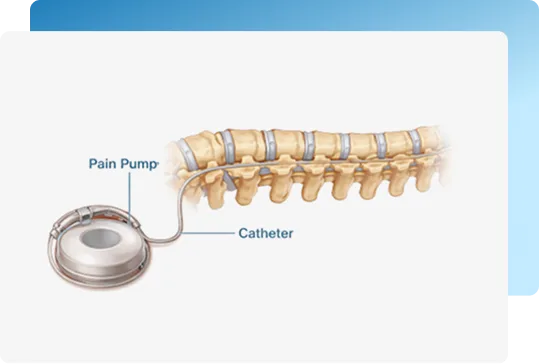
Refills are done in the clinic through a quick, sterile needle access port every few months.
How the Procedure Is Performed
The Trial Phase
A temporary catheter and external pump are used for several days to test effectiveness and tolerance.
Permanent Implant
If the trial is successful, the permanent system is placed under sterile conditions, typically under light sedation. The pump is positioned beneath the skin of the lower abdomen, and the catheter is tunneled to the spinal canal.
The procedure takes about 60–90 minutes and is done on an outpatient or short-stay basis.
What to Expect Afterward
-
Mild soreness at incision sites for a few days
-
Return to light activity in about a week
-
Periodic follow-up visits for pump programming and refills
-
Most patients report steady, consistent pain relief with fewer systemic side effects
Because the medication is concentrated in the spinal fluid, the overall dose needed is extremely small.
Safety and Risks
When implanted and managed by experienced specialists, spinal pain pumps are safe and effective.
Potential but rare complications include:
-
Catheter displacement or blockage
-
Infection or fluid collection at the implant site
-
Over- or under-delivery of medication (monitored closely)
Your doctor and nursing team provide detailed education on incision care and refill scheduling.
When to See a Specialist
If chronic pain limits your activity or quality of life despite injections, therapy, or surgery, a spinal pain pump trial may help determine whether targeted drug delivery is right for you.
Our team performs both trial and permanent implants under sterile, image-guided precision for maximum safety and comfort.
Get urgent care for these
- New weakness in a leg or foot, or a foot that drags
- Loss of bladder or bowel control, or numbness around the groin
- Back pain with fever, chills or unexplained weight loss
- Severe pain immediately after a fall or collision
These need assessment now, not an appointment next week. Go to an emergency department or call 911.
Common questions about lower back pain