
Lower Back treatment
Epidural Steroid Injection (ESI): Reducing Nerve Inflammation and Pain
Epidural Steroid Injection
(ESI): Reducing Nerve
Inflammation and Pain

An epidural steroid injection (ESI) is a safe, image-guided procedure used to relieve pain caused by inflammation or compression of the spinal nerves.
By placing anti-inflammatory medication near the affected nerves, this treatment can ease symptoms of sciatica, herniated discs, or spinal stenosis often helping patients return to normal activity without surgery.
Why It’s Done

Epidural steroid injections are commonly recommended when pain radiates from the spine into the arms or legs often due to nerve irritation.
ESIs can help with:
-
Lumbar or cervical radiculopathy (pinched nerve)
-
Herniated or bulging discs
-
Spinal stenosis
-
Inflammation following spine surgery or injury
How the Procedure
Works
-
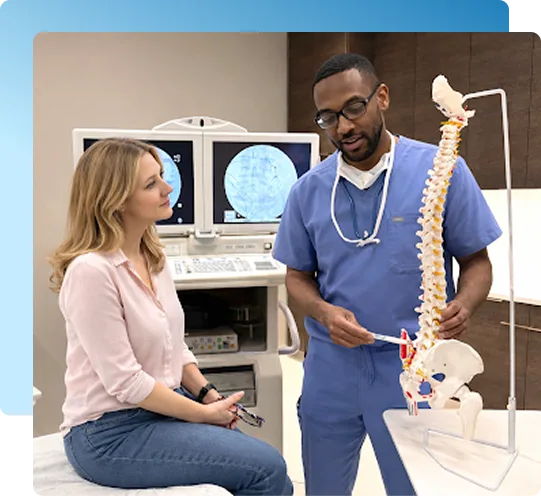
Preparation – You’ll lie comfortably on a table in a procedure suite. The skin is cleaned and numbed with local anesthetic.
-
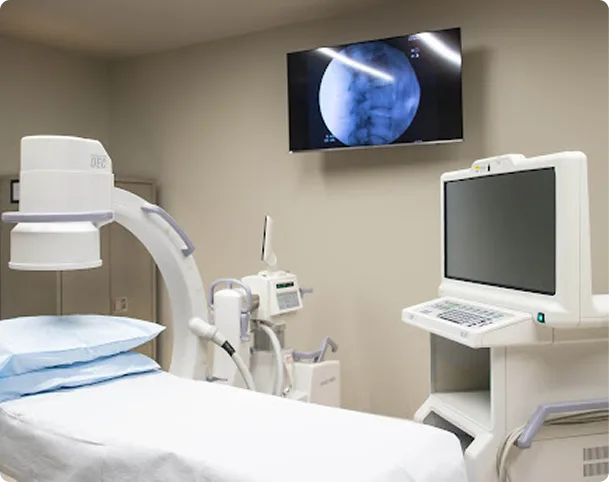
Image Guidance – Using fluoroscopy (real-time X-ray), the physician positions a small needle into the epidural space near the inflamed nerve.
-
Medication Delivery – A contrast dye confirms placement before a small mixture of steroid and anesthetic is injected.
-
Completion – The needle is removed and a sterile bandage applied. You rest briefly before going home.
The procedure typically takes 15–30 minutes.
What to Expect Afterward
Seek immediate care if you notice:
-
Mild soreness at the injection site for a day or two
-
Pain relief may begin within a few days as the steroid takes effect
-
Some patients experience immediate temporary relief from the anesthetic
-
Return to light activities the same day; avoid strenuous exercise for 24 hours
Improvement may last weeks to months, depending on the cause and severity of inflammation.


How It Helps
Steroid medication reduces inflammation around the irritated nerve root, which helps relieve:
-
Shooting pain down the leg or arm
-
Tingling or numbness
-
Sleep or movement limitations due to nerve pain
ESIs do not “fix” structural issues like a herniated disc but often allow natural healing to progress and physical therapy to resume comfortably.
Safety and Risks
Potential—though rare—side effects include:
Epidural injections are one of the most frequently performed spine procedures and are generally very safe when done under imaging guidance.
-
Temporary headache or facial flushing
-
Localized soreness
-
Transient increase in pain before improvement
-
Very rare infection or bleeding
Patients on blood thinners or with diabetes should discuss special precautions with their doctor.

When to See a Specialist
If pain radiates from your back into your arms or legs, or if tingling and weakness limit your activity, an Epidural Steroid Injection may help reduce inflammation and improve function.
Get urgent care for these
- New weakness in a leg or foot, or a foot that drags
- Loss of bladder or bowel control, or numbness around the groin
- Back pain with fever, chills or unexplained weight loss
- Severe pain immediately after a fall or collision
These need assessment now, not an appointment next week. Go to an emergency department or call 911.
Common questions about lower back pain