
Lower Back condition or diagnosis
Lumbar Facet Arthropathy: Arthritis of the Spine’s Small Joints

If your lower back pain worsens when standing, leaning back, or twisting, you may be experiencing Lumbar Facet Arthropathy a form of arthritis affecting the small joints along the back of the spine. These facet joints guide movement and provide stability, but when they degenerate, they can become a common source of chronic back pain.
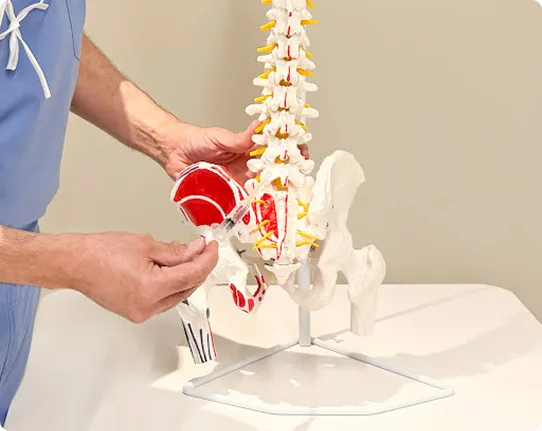
Understanding the Facet Joints

Each level of the spine has two pairs of facet joints one on each side connecting the vertebrae above and below.
Their functions include:
-
Allowing smooth bending and rotation
-
Preventing excessive twisting or sliding
-
Sharing load-bearing duties with the discs
When these joints lose cartilage or become inflamed, they can transmit pain signals to nearby nerves.
What Causes Facet Arthropathy


-
Aging and wear: gradual cartilage breakdown leads to joint irritation.
-
Degenerative Disc Disease: as discs lose height, increased stress shifts to the facets.
-
Repetitive strain or posture: frequent bending or twisting accelerates joint wear.
-
Prior injury: trauma can disrupt normal alignment.
-
Obesity or poor core strength: increases spinal load and pressure.
Common Symptoms

Facet joint arthritis typically causes mechanical back pain, meaning it worsens with movement and posture changes. Typical symptoms include:
-
Dull ache in the lower back, often on one side
-
Pain worse with standing, arching backward, or twisting
-
Stiffness after sitting or sleeping
-
Relief when sitting or leaning forward
-
Localized tenderness over the spine


Who Is at Risk

-
Adults over 40
-
People with sedentary or repetitive lifting jobs
-
Those with poor posture or weak abdominal support
-
Patients with prior spine surgery or injury
-
Individuals with Degenerative Disc Disease or Spondylosis
How It’s Diagnosed

Because facet joints are small and deep, the diagnosis relies on a combination of physical findings and image-guided testing.

Clinical Evaluation
A physician reviews posture, movement patterns, and pain triggers (especially extension or rotation).
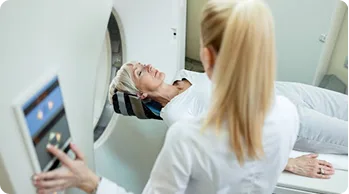
Imaging Studies
-
X-rays: show joint space narrowing or bone overgrowth.
-
MRI: reveals cartilage loss or swelling around the joints.
-
CT scans: can visualize the bony joint surfaces in detail.

Diagnostic Medial Branch Block
A temporary numbing injection under fluoroscopic guidance helps confirm that the facet joints are the pain source.
When to See a Specialist
If you notice pain when bending backward, stiffness after sitting, or discomfort that limits activity, a spine evaluation can help identify whether facet joints are the true source.
Get urgent care for these
- New weakness in a leg or foot, or a foot that drags
- Loss of bladder or bowel control, or numbness around the groin
- Back pain with fever, chills or unexplained weight loss
- Severe pain immediately after a fall or collision
These need assessment now, not an appointment next week. Go to an emergency department or call 911.
Common questions about lower back pain