
Lower Back condition or diagnosis
Lumbar Radiculopathy: When a Pinched Nerve Causes Leg Pain

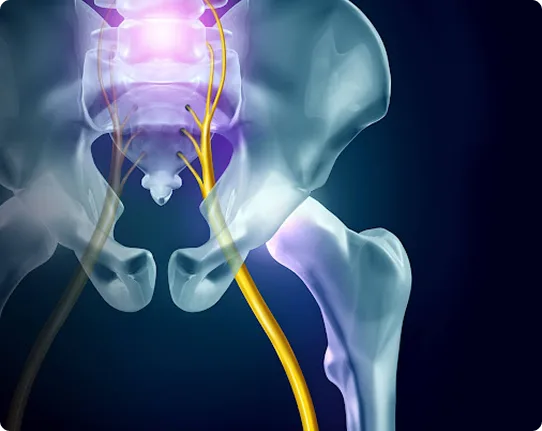
When a nerve root in your lower back becomes irritated or compressed, it can cause pain, tingling, numbness, or weakness that travels down your leg. This is called Lumbar Radiculopathy commonly referred to as a “pinched nerve.”
Understanding the anatomy and cause is essential to finding lasting relief.
What Is Lumbar Radiculopathy?

The lumbar spine contains nerve roots that branch off from the spinal cord and travel to your hips, legs, and feet. Each nerve root exits the spinal column through a small space between vertebrae called a foramen.
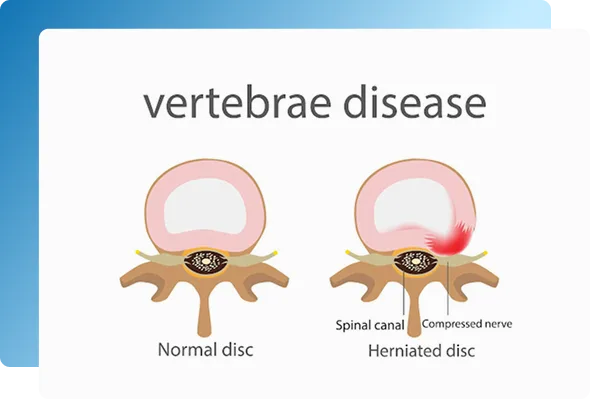
When that space narrows or a nearby disc or joint presses on the nerve, inflammation develops and signals pain along the nerve’s pathway.
Common Causes

-
Herniated or Bulging Disc – Disc material protrudes and compresses a nerve root.
-
Degenerative Disc Disease – Disc height loss narrows the opening for the nerve.
-
Spinal Stenosis – Age-related narrowing of the spinal canal.
-
Spondylolisthesis – A vertebra slips forward, pinching the nerve.
-
Facet Joint or Bone Spur Formation – Arthritic changes encroach on the nerve space.
Common Symptoms

-
Low back or neck pain that worsens with sitting or bending
-
Pain that improves when walking or lying down
-
Occasional shooting or tingling sensation down the leg (if nerves are affected)
-
Stiffness, reduced flexibility, or pain after activity

How It Differs from Sciatica
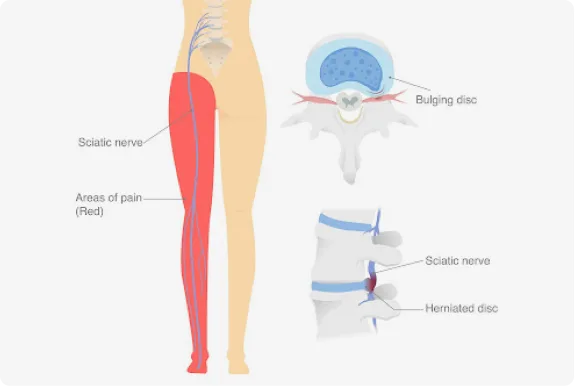
“Sciatica” is a symptom pain radiating down the leg whereas Lumbar Radiculopathy is the underlying condition causing that symptom. Radiculopathy identifies the specific nerve root involved and allows targeted treatment.

Who Is at Risk

-
Middle-aged adults (30–60 years old)
-
Individuals performing heavy lifting or twisting
-
Those with prior spinal degeneration or injury
-
People with sedentary or desk-bound jobs
Symptoms
Other common symptoms include:
-
Shooting or burning pain down the leg
-
Numbness or tingling in a specific area
-
Muscle weakness or loss of reflexes
-
Pain that worsens with sitting, coughing, or sneezing
When to Seek Medical Attention
You should see a specialist if:
-
Pain lasts longer than 1–2 weeks despite rest
-
Weakness, numbness, or tingling develops
-
Pain radiates below the knee or into the foot
-
You experience loss of bladder or bowel control (emergency)
How It’s Diagnosed

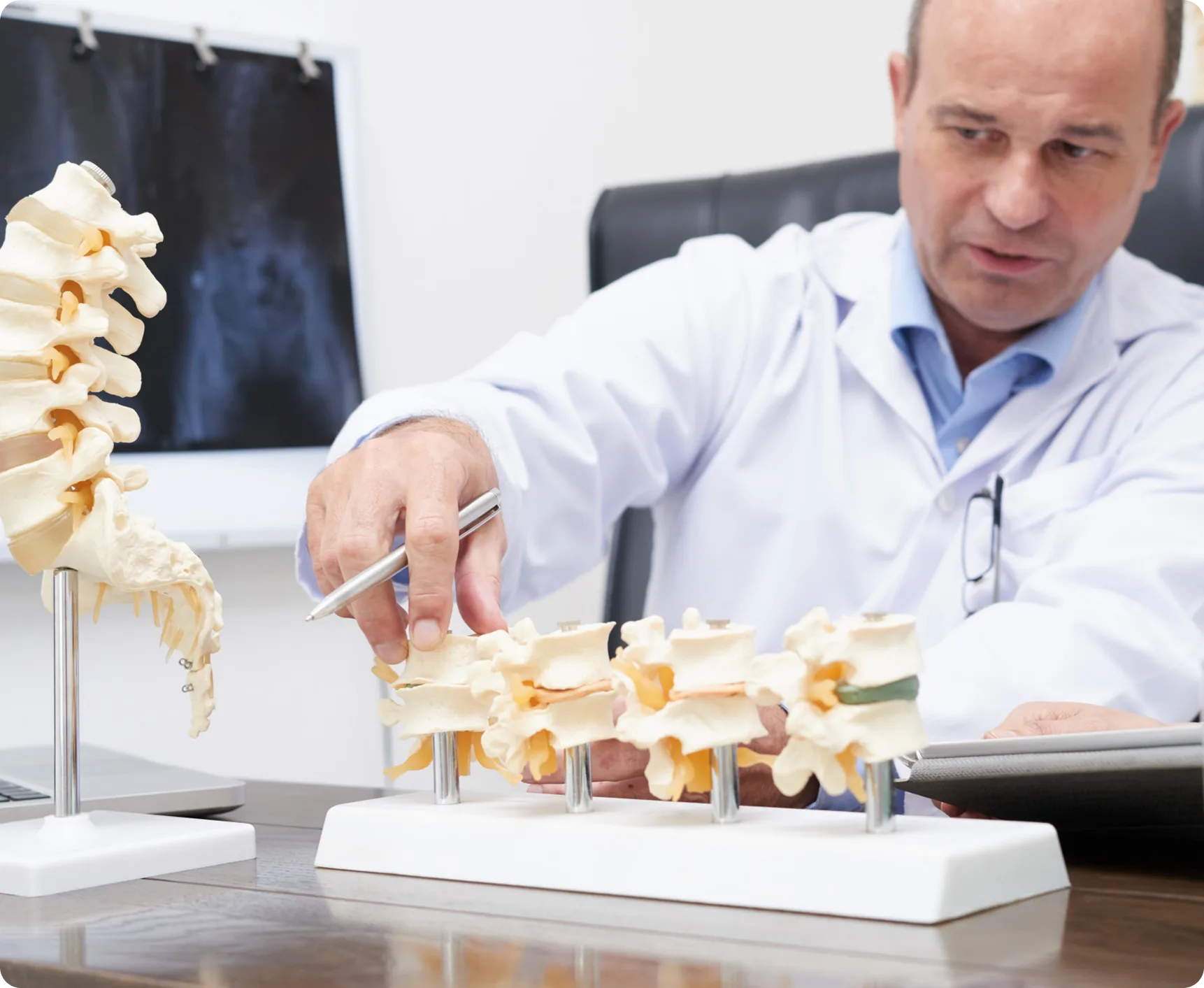
Diagnosis starts with a detailed history and neurological exam. Specialists then use imaging and targeted diagnostic procedures to confirm which nerve is involved.

Physical Examination
Reflex testing, muscle strength assessment, and sensory mapping determine which nerve root may be affected.
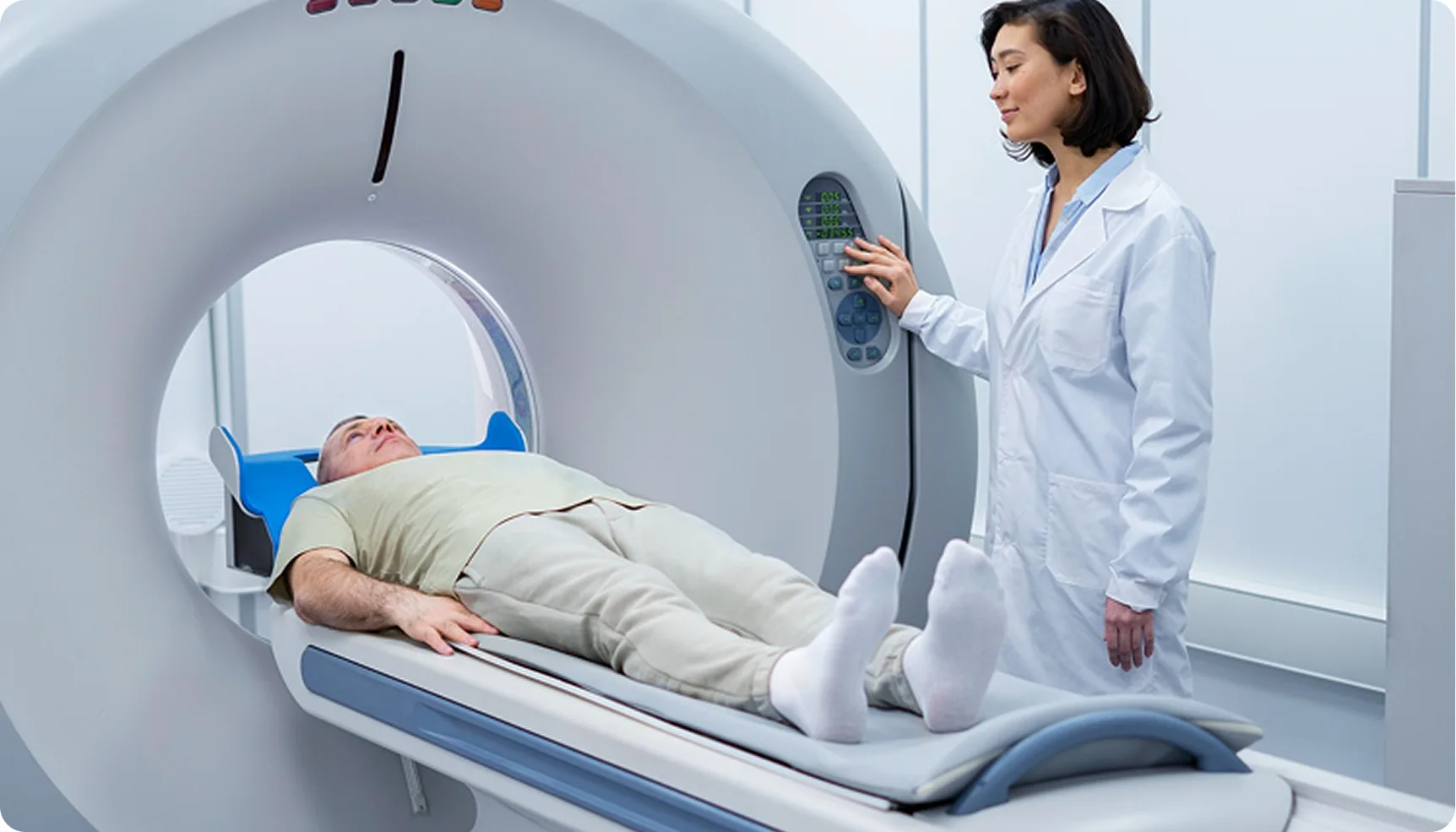
Imaging
-
MRI: visualizes soft tissue and nerve compression.
-
CT or CT Myelogram: may be used if MRI is inconclusive.

Electrodiagnostic Testing (EMG/NCS)
Confirms nerve function and differentiates radiculopathy from peripheral neuropathy.
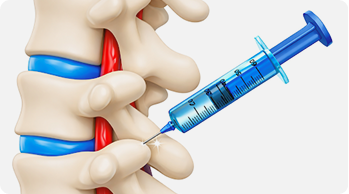
Diagnostic Nerve Block
A precise, image-guided injection of numbing medicine can confirm the source of pain.
When to Take the Next Step
A precise diagnosis is the key to effective treatment. Our team uses advanced imaging and image-guided diagnostics to confirm which nerve is affected so care can be tailored to you.
Get urgent care for these
- New weakness in a leg or foot, or a foot that drags
- Loss of bladder or bowel control, or numbness around the groin
- Back pain with fever, chills or unexplained weight loss
- Severe pain immediately after a fall or collision
These need assessment now, not an appointment next week. Go to an emergency department or call 911.
Common questions about lower back pain