
Lower Back condition or diagnosis
Lumbar Spondylosis: Understanding Spinal Arthritis and Aging

If you’ve been told you have Lumbar Spondylosis, it means your lower spine is showing normal signs of wear and tear similar to arthritis in other joints. While the term sounds concerning, it simply describes degenerative changes that occur in the bones, discs, and joints of the lumbar spine as we age.
Understanding these changes helps explain back stiffness, pain, or limited movement and why early evaluation can prevent long-term issues.
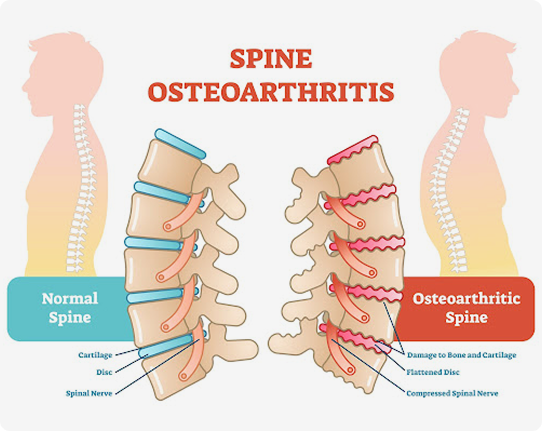
What Is Lumbar Spondylosis?

The lumbar spine is made up of vertebrae separated by discs and connected by small joints called facets.
Over time, these structures can degenerate
-
Discs lose height and flexibility
-
Joints become arthritic
-
Bone spurs (osteophytes) may form
-
Ligaments can stiffen or thicken
Together, these changes are known as spondylosis a broad term describing spinal arthritis and degeneration.
Common Causes


-
Aging: the most common cause, as spinal discs dry and lose cushioning.
-
Repetitive strain: bending, lifting, or twisting activities.
-
Previous injury: accelerates joint and disc wear.
-
Genetics: family tendency toward early degeneration.
-
Posture and sedentary lifestyle: weaken core support and increase spinal load.
Symptoms

Lumbar Spondylosis can range from mild stiffness to chronic pain depending on the severity of degeneration. Common symptoms include:
-
Low back stiffness, especially in the morning or after sitting
-
Pain that worsens with standing or extension
-
Localized tenderness over the spine
-
Occasional radiating pain if nerves are irritated
-
Decreased flexibility or range of motion

Common Symptoms

- ODecreased flexibility or range of motion

Who Is at Risk

-
Adults over 40
-
Those with jobs requiring repetitive bending or lifting
-
Individuals with sedentary habits or weak core muscles
-
Smokers or those with poor circulation
How It Differs from Degenerative Disc Disease

While both are age-related, DDD affects the discs between vertebrae, whereas Spondylosis affects the bone and joints. They often occur together and contribute to similar symptoms.
How It’s Diagnosed
An accurate diagnosis combines your history, exam, and imaging:

Physical Examination
Your physician evaluates spinal motion, tenderness, reflexes, and nerve function.
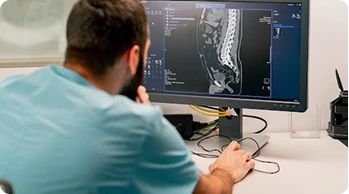
Imaging Studies
-
X-rays: show disc space narrowing, bone spurs, or facet arthritis.
-
MRI: reveals soft-tissue and nerve involvement.
-
CT scans: may clarify joint structure and canal narrowing.
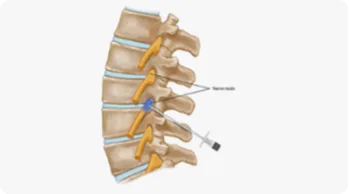
Diagnostic Blocks
If pain is suspected to come from arthritic facet joints, medial branch nerve blocks can confirm the source.
When to See a Specialist
If back stiffness or pain is limiting your work, exercise, or sleep, it’s worth having an evaluation.
Identifying spondylosis early allows for targeted management before nerve irritation or advanced arthritis develops.
Get urgent care for these
- New weakness in a leg or foot, or a foot that drags
- Loss of bladder or bowel control, or numbness around the groin
- Back pain with fever, chills or unexplained weight loss
- Severe pain immediately after a fall or collision
These need assessment now, not an appointment next week. Go to an emergency department or call 911.
Common questions about lower back pain